Get inspired for your next home improvement projects by browsing through our blog posts, which are full of great tips, valuable advice, and industry insights.

Blog
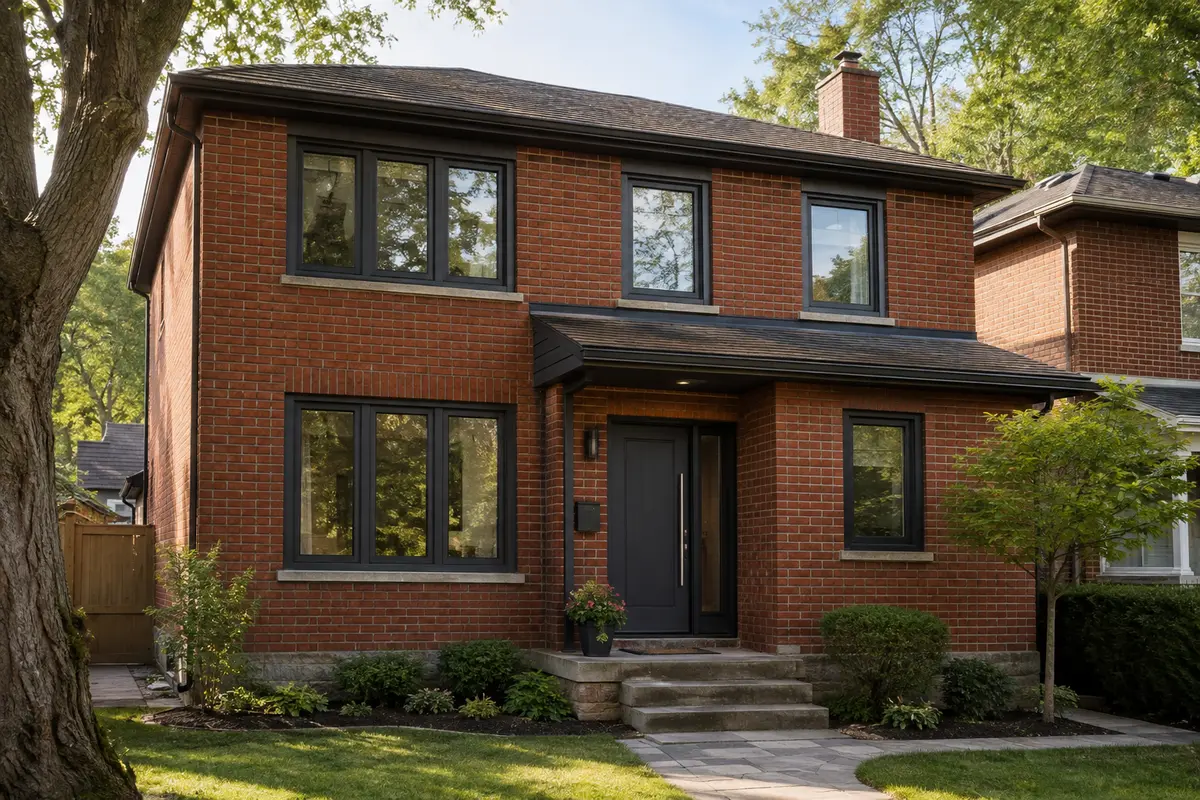
Should you replace your windows and entry door in one project, or complete the work in stages? For many Toronto homeowners, both upgrades become necessary around the same period. The windows may feel drafty, difficult to operate or visibly worn, while the front door no longer seals properly or provides the security, comfort and appearance the home needs.
Combining the work can make planning easier and help the exterior look intentional. It can also reduce the number of consultations, deliveries and installation periods your household has to manage. However, replacing everything at once is not automatically the best financial or technical decision. The right approach depends on what is failing, how many openings need attention, your budget, the products you choose and the condition of the surrounding walls and frames.
When homeowners compare windows and doors in Toronto as one exterior project, the decision should begin with the condition of each opening—not with an assumption that everything must be replaced.
This guide explains when it makes sense to replace windows and doors together, when a phased project is better, which upgrade should come first and what to ask before approving a combined quote.
Yes—replacing windows and doors at the same time often makes sense when both are near the end of their useful service life, both are causing comfort problems, or you want one coordinated exterior renovation. It can simplify product selection, measurements, scheduling and finishing decisions.
But you do not need to replace a good entry door simply because some windows have failed, and you do not need to replace every window because the front door is drafty. A professional assessment should separate urgent problems from optional upgrades.
A combined project is usually worth considering when:
A phased plan is often better when only one product has an urgent problem, the rest still perform well, or dividing the project allows you to choose better products and professional installation.
Windows and exterior doors are separate products, but they are part of the same building envelope. Each opening must resist air leakage, water intrusion, temperature changes and daily use. Looking at them together gives you a clearer picture of how the exterior performs as a whole.
During one assessment, an experienced installer can examine the windows, front entry system, patio door and other exterior doors. That does not mean every opening must be replaced. It means you can receive one organized list of what needs immediate attention, what should be monitored and what can remain in service.
This whole-home view is especially useful when different rooms have different symptoms. A cold living room may point to old windows, while condensation or staining near the entrance may involve the door sweep, threshold, frame or surrounding materials. A proper inspection helps prevent guesswork.
A combined project may reduce repeated measuring visits, product-selection appointments, deliveries and installation preparation. It can also make it easier to plan access, move furniture, protect floors and arrange time at home.
Project-level efficiencies may be possible, but homeowners should not assume a specific discount. Custom windows and doors are priced according to their dimensions, materials, glass, hardware, installation requirements and finishing work. Ask the contractor to show exactly what is included in the combined quote rather than relying on a general promise of savings.
Every replacement project involves some preparation. Window coverings may need to be removed, furniture moved away from openings and an entry path kept clear. Completing related work in one scheduled project can reduce the number of times you repeat those tasks.
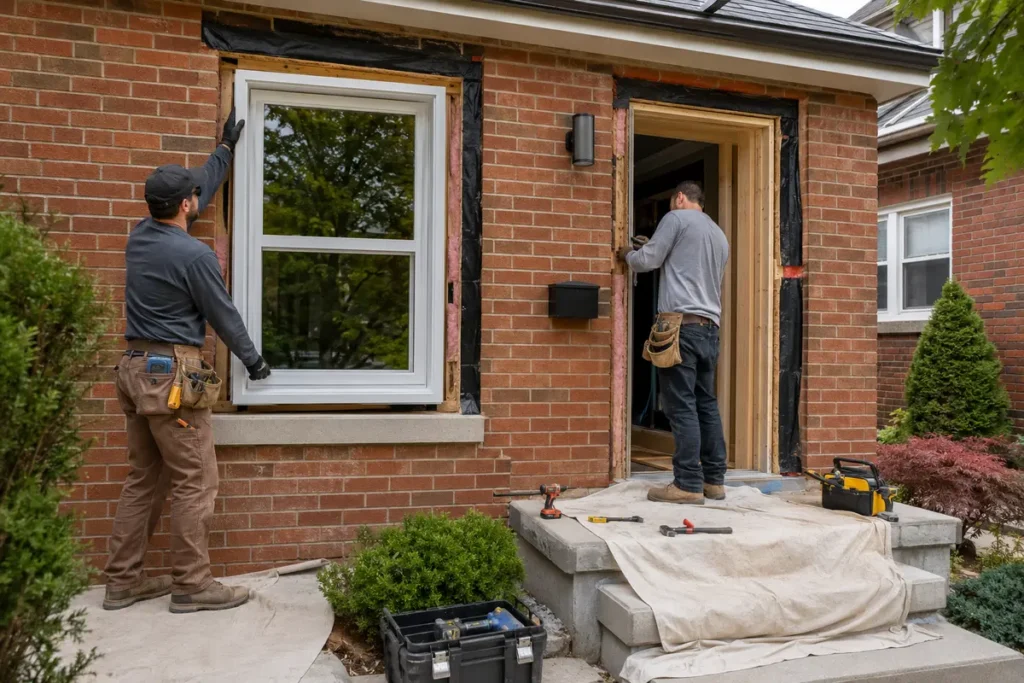
The work does not necessarily have to occur on one day. A larger project may be completed over several days, with each opening secured and weather-protected as work progresses.
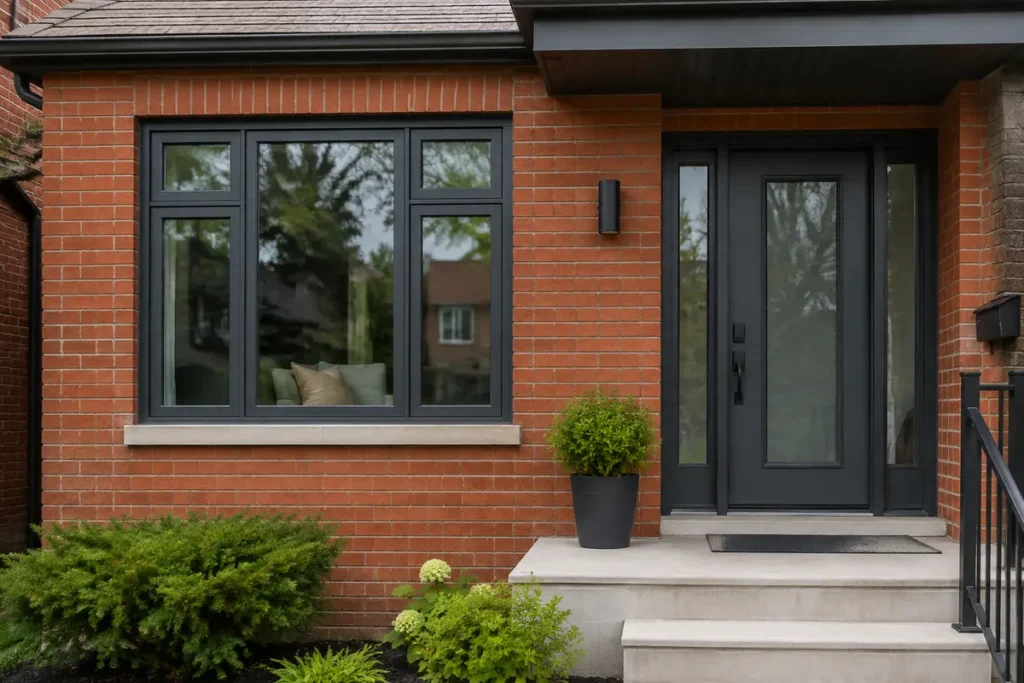
Windows occupy a large portion of a home’s façade, while the front door is a natural focal point. Selecting both together makes it easier to coordinate frame colours, trim profiles, glass, grilles and hardware.
Coordination does not require every element to be identical. A deep-coloured front door can serve as an accent while the window frames remain neutral. The goal is for the choices to feel related to the brick, siding, roofline and architectural style.
If old windows and an old door both leak air, replacing only one part may improve comfort without resolving every draft. Addressing the priority openings together can create a more noticeable overall result.
Product quality matters, but installation matters just as much. The new units must be measured correctly, set square and level, insulated around the frames, sealed against water and finished properly. Learn more about our approach to professional window and door installation.
Consider one combined project when several of the following conditions apply.
If the windows and exterior doors were installed during the same renovation, they may begin showing wear around the same period. Similar age alone is not enough reason to replace them, but it is a useful signal to inspect them together.
Look for hard operation, loose or damaged hardware, recurring drafts, deteriorated weatherstripping, failed sealed glass units, water staining, soft or damaged frame materials and visible gaps around trim.
A combined project is easier to justify when the issues are not limited to appearance. Examples include:
Some symptoms can be repaired. Others indicate that replacement is more sensible. Ask for the reason behind every recommendation.
If your plan includes a new colour palette, updated trim, new siding or a redesigned entrance, choosing windows and doors together can prevent mismatched finishes later. It also allows the contractor to confirm how the products will relate to existing masonry, exterior trim and interior finishes.
Interior casing, exterior capping, paint touch-ups and nearby wall repairs can overlap with window and door replacement. When the products are completed in one broader project, the finishing plan can be coordinated from the start.
Homeowners planning to stay for years may value the convenience of completing priority upgrades together. The decision should still be based on condition, comfort, security and budget—not on a guaranteed increase in resale value or energy savings.
There is nothing wrong with replacing windows and doors in stages. In many homes, a thoughtful phased plan is the most responsible choice.
A door that cannot lock securely, an opening with active water intrusion or a damaged window that will not close should take priority. Do not delay an urgent repair merely to wait until the entire project fits one schedule.
If one elevation receives harsh sun and weather while the rest of the windows remain sound, replacing only the affected group may be sensible. Likewise, a worn front door can be replaced while good windows remain in place.
It is usually better to complete the highest-priority openings properly than to stretch the budget across too many openings and compromise on glass, hardware or installation. Ask the contractor to create a master plan so products selected in later phases can still coordinate with the first phase.
Structural repairs, masonry restoration, changes to opening sizes, siding replacement or interior remodeling may affect the correct sequence. Coordinate the trades before ordering custom products.
Some homeowners begin with the coldest rooms, the most damaged windows or the front entrance. Living with the first set of products can help confirm preferences for operation, colour and glass before the next order.
If you are not completing everything together, start with the opening that creates the greatest risk or inconvenience.
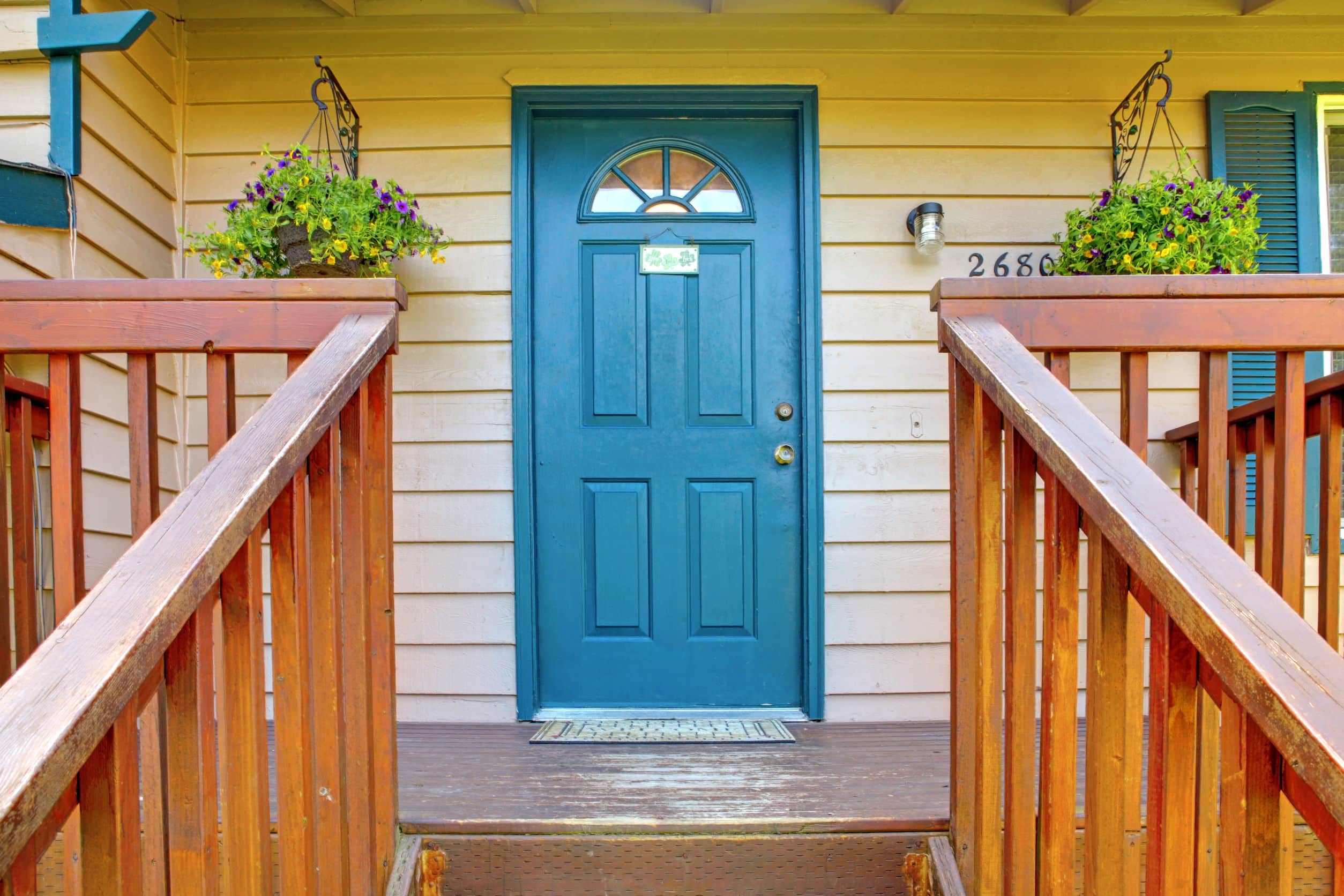
The entry door should usually come first if it does not lock securely, the frame is damaged, the slab is badly warped, the threshold leaks or daily operation is unreliable. The entrance is also the priority when accessibility or a safer operating configuration is needed.
Our guide to entry door replacement in Toronto explains the product and planning decisions in more detail. You can also compare fiberglass and steel entry doors before choosing a material.
Windows may come first when failed seals, drafts, poor operation or water concerns affect many rooms. Start with openings that have active problems and bedrooms where safe, dependable operation is especially important.
For budgeting, review our detailed window replacement cost guide for Toronto. It explains why opening size, style, glass, installation type and finishing details change the quote.
If both groups are failing and your budget supports a well-specified project, there may be little benefit in creating separate orders. One assessment can identify the correct scope and one design plan can keep the exterior consistent.
A good combined project begins with diagnosis, not a product count. Use the following process before signing a contract.
Walk through the home room by room. Record drafts, hard operation, condensation location, visible damage, noise concerns and water staining. Note whether each issue is constant or appears only in wind, rain or very cold weather.
Do not assume that all condensation means a failed window. Moisture on the room-side surface can relate to indoor humidity and outdoor temperature, while moisture trapped between panes points to a failed sealed unit.
Create three groups:
This prevents optional work from hiding the most important repairs.
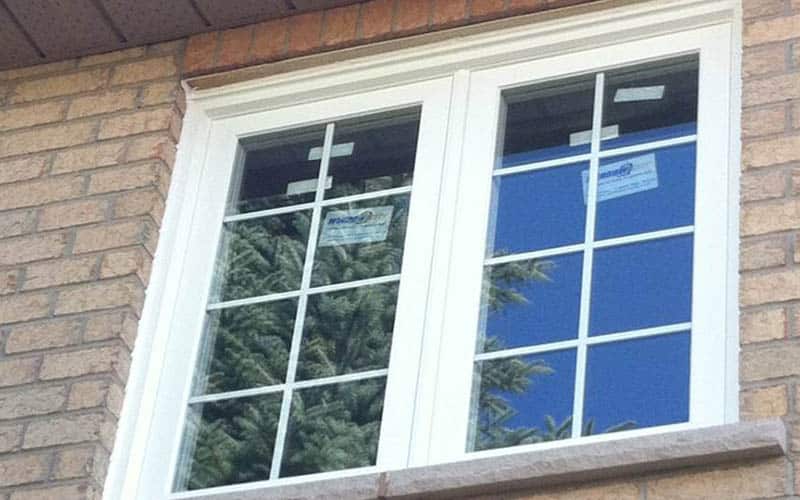
For windows, compare operating style, glass package, Low-E coating, spacer system, frame construction, hardware and the installation method. If you are deciding between glass packages, read our comparison of double-pane and triple-pane windows in Toronto.
If outdoor noise is one of your main concerns, our guide to soundproof windows in Toronto explains why the complete glass and frame system matters.
For the entry, compare door material, frame, threshold, weatherstripping, glass, locking hardware and configuration. A strong slab cannot perform properly in a poorly fitted or deteriorated frame.
The quote should identify each opening and product, not merely provide one total. Confirm:
This makes it easier to compare contractors and adjust the scope without losing track of quality.
Custom products should not be ordered from rough estimates. Final measurements must reflect the opening, chosen installation method and required clearances.
Ask whether windows and doors will arrive together, whether the installation will occur on consecutive days and how the team will secure the home if weather changes. Our window replacement process guide and entry door installation guide show what homeowners can expect from preparation through final inspection.
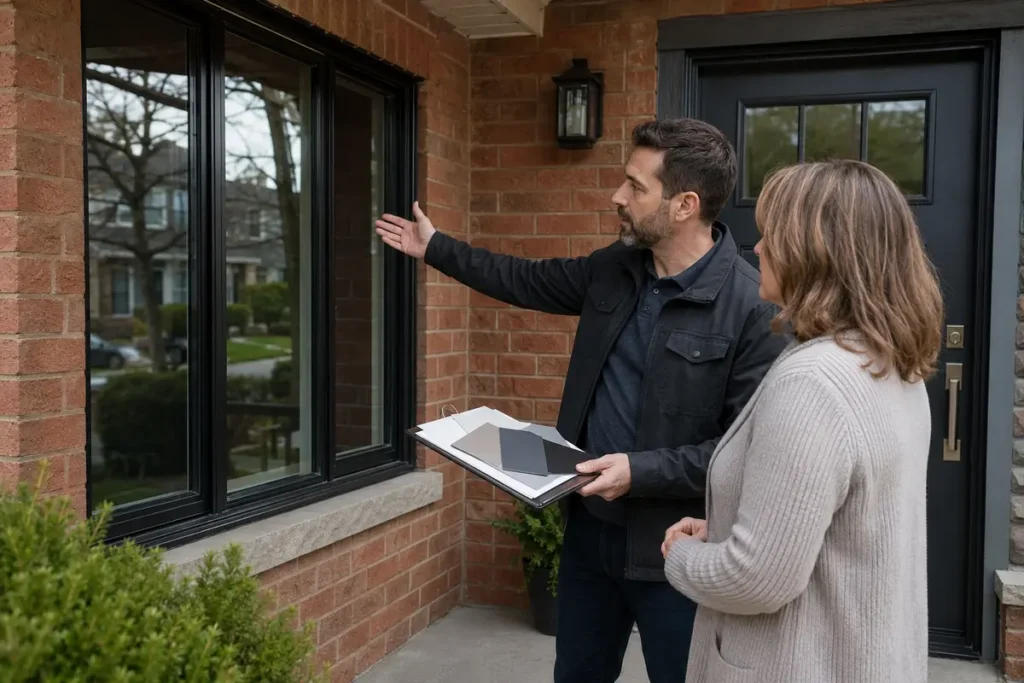
Replacing both product groups gives you an opportunity to make the exterior more cohesive. Start with the permanent features of the home rather than a short-lived trend.
Bring clear daylight photos of the entire façade to the consultation. A small colour sample can look different beside a large area of red brick, buff brick, stone or siding. Consider the roof, soffits, eavestroughs and garage door as part of the palette.
Dark window frames and doors can create definition, while lighter or warmer neutrals may blend more quietly. The right choice depends on the home; there is no single colour that suits every Toronto property.
The door can match the window frames for a calm, unified appearance, or it can introduce a controlled accent colour. If it will be different, repeat a related finish in the hardware, lighting or other small exterior details so the entrance does not feel disconnected.
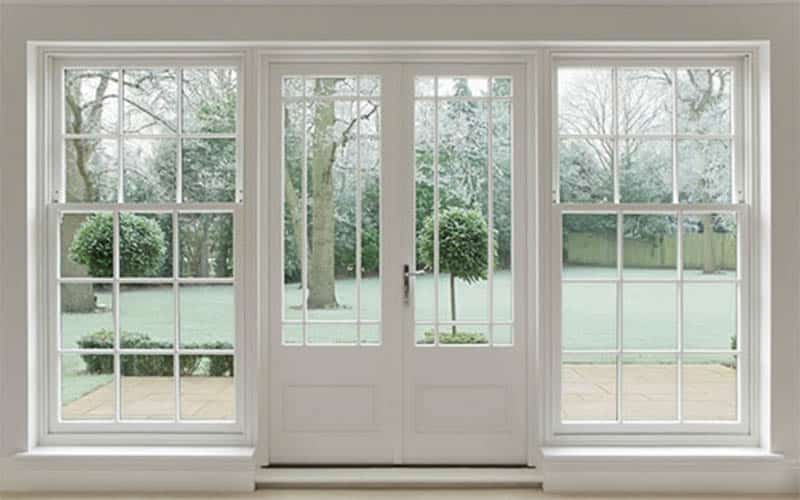
Window grilles, door glass and sidelights should relate to the architecture. A simple modern door can work with clean, unobstructed windows, while a traditional façade may suit restrained grille patterns. Avoid adding visual elements to every opening simply because they are available.
Privacy also matters. Decorative or obscured glass may be useful at the entrance, while windows should preserve the daylight, ventilation and view needed in each room.
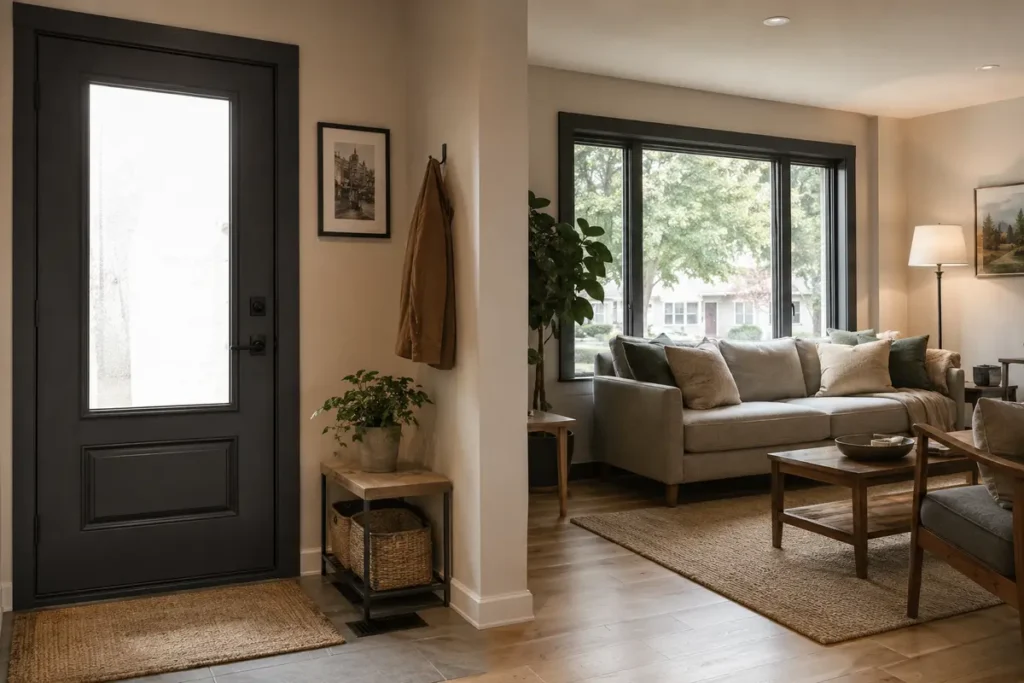
Exterior coordination is only half the decision. Check interior frame colours, casing, handles, door hardware and nearby flooring or cabinetry. Confirm whether existing trim will be reused or replaced and who is responsible for touch-ups.
Replacing inefficient or poorly sealed products can reduce drafts and heat transfer around those openings. Whether the improvement is large or modest depends on the condition of the old products, the specifications of the new products and the quality of installation.
For a useful upgrade, look beyond the number of panes. Compare the complete window or door system, including:
New products do not correct unrelated attic, wall, basement or mechanical-system problems. If energy use is the main reason for the renovation, a home energy assessment can help identify where improvements are likely to matter most.
Avoid promises of a universal percentage reduction in energy bills. Actual results vary with the home, weather, thermostat settings, indoor humidity, energy prices and the number and condition of openings replaced.
There is no reliable single price for a combined Toronto project because the scope can range from a few windows and one standard entry door to a whole-home replacement with custom configurations.
The window portion is affected by:
The door portion is affected by:
Ask for separate line items even when the contractor offers one project total. That allows you to see what can be postponed and prevents an attractive total from hiding missing work.
When comparing quotes, verify that each company is pricing the same installation scope and finish level. A lower number is not a savings if disposal, capping, trim, hardware or necessary repairs appear later as extras.
Yes. Windows and doors can be installed as part of the same project, but “at the same time” does not have to mean that every opening is removed at once. A professional crew sequences the work so the home remains secure and exposed openings are limited.
For a smaller scope, the windows and door may be completed in one day. A whole-home project commonly needs additional time. The actual schedule depends on the number and complexity of products, crew size, access, finishing requirements, weather and any conditions discovered after removal.
Before installation:
During the final walkthrough, operate every window, lock and door. Check the seals and finishes, review care instructions and report questions before the crew leaves. Keep contracts, invoices, product labels and warranty documents together.
Do not combine the work solely because you assume the windows and door will count as two different rebate upgrades. Under the current assessment-based Home Renovation Savings rules, eligible windows, doors, skylights and sliding doors are grouped as one qualified measure, even when more than one type is installed.
The program also has eligibility, assessment, product, installation and documentation requirements. If you may apply, review our updated Ontario window and door rebate guide and confirm the latest requirements on the official Home Renovation Savings program website before ordering or starting work. Program terms and funding can change.
Keep required product labels and paperwork until every assessment and application step is complete. Ask the program administrator—not only the contractor—when you need a definitive eligibility answer.
Use the same questions for every company so the quotes are easier to compare.
Read the written warranty rather than relying on a verbal summary. You can review our warranty information and customer testimonials as part of your research.
Housing styles and opening conditions vary across Toronto and the surrounding communities. A downtown semi-detached home, a mid-century bungalow and a newer suburban detached home may need different products and installation details.
Imperial Windows and Doors serves homeowners throughout Toronto and nearby areas, including:
The useful first step is the same in every area: assess the openings, rank the priorities and build a scope based on the home rather than a generic package.
Replacing windows and doors together may be the right choice if you can answer yes to most of these questions:
If several answers are no, pause and refine the plan. A smaller, correctly specified first phase is better than a larger project with unresolved details.
It can create project-level efficiencies by combining consultations, measurements, deliveries or scheduling, but savings are not guaranteed. Compare an itemized combined quote with the same product and installation specifications you would choose in separate phases.
No. They need compatible performance, dimensions, colours and finishing details, but the best window and best door for a home do not have to carry the same brand. The contractor should explain who supplies each product and how warranties and service are handled.
No. Matching can create a unified appearance, while a contrasting door can act as a focal point. Compare the proposed colours beside the home’s brick, siding, roof and interior finishes before ordering.
Start with the greater risk. Prioritize a door with security, access or water problems. Prioritize windows when failed units, leaks or poor operation affect multiple rooms. If the needs are similar and the budget works, complete them as one project.
Many specialized window-and-door companies install both, but ask who will perform each part of the project and what training, supervision and warranty apply. The contract should describe both installation scopes.
A small project may be completed in one day, while a whole-home replacement can take several days. Product count, opening condition, access, crew size, weather and finishing requirements determine the schedule. Get the expected sequence in writing.
Yes, professional installation can be completed in cold weather when conditions are safe and the crew limits how long each opening remains exposed. Severe weather may require rescheduling. Ask how the installer protects the home and which sealants are appropriate for the conditions.
Not under the current assessment-based Home Renovation Savings structure. Eligible windows, doors, skylights and sliding doors are grouped as one qualified measure. Confirm current rules before ordering because programs can change.
Replace based on condition, performance, safety, design goals and budget. Keeping sound windows can be reasonable. If you phase the work, record the chosen frame colour, glass, grille and trim details so future products can coordinate.
Compare opening by opening. Check product series, glass, frame or slab material, hardware, installation method, finishing, disposal, warranties, payment terms and exclusions. Do not compare totals until the scopes match.
Replacing windows and an entry door together can be a practical way to improve comfort, operation, security and exterior design—when both parts of the home genuinely need attention. The best plan is not necessarily the largest one. It is the plan that addresses the right openings with suitable products, clear specifications and careful installation.
Explore our replacement windows and exterior door options, or learn more about new entry doors. If you are comparing trusted providers, our guide to the best window companies in Toronto explains the questions that matter.
For help deciding between one combined project and a phased plan, contact Imperial Windows and Doors to arrange an assessment for your Toronto or GTA home. Our team can help you prioritize the openings, compare suitable products and prepare a clear window-and-door replacement quote.

Imperial Windows and Doors have long been serving our valued clients for over 10 years to be exact. We strive to deliver our clients only the finest solutions guaranteed to suit their needs, style, preferences and budget.

Imperial Windows & Doors provides professionally installed replacement windows, entry doors and patio doors for homeowners across Toronto and the GTA.