Get inspired for your next home improvement projects by browsing through our blog posts, which are full of great tips, valuable advice, and industry insights.

Blog

Last reviewed: August 05, 2026
Toronto is not a quiet city. Depending on where you live, the background sound may include cars, buses, streetcars, construction, aircraft, delivery trucks, barking dogs or late-night activity from a nearby commercial area.
Toronto Public Health’s environmental noise study reported an overall 24-hour average of 63 dBA at the locations it studied and estimated that nearly 60% of Toronto’s noise could be attributed to traffic. For homeowners living beside a major road, transit route or flight path, that noise can affect sleep, concentration and everyday comfort.
Homeowners looking for soundproof windows in Toronto should understand one important point before requesting quotations: no ordinary residential window can block every sound.
A properly selected and installed window can make a home noticeably quieter, but the outcome depends on much more than choosing double-pane or triple-pane glass. Glass thickness, lamination, airspace, window style, weatherstripping, frame condition and installation all influence the final result.
This guide explains what genuinely helps, what is frequently misunderstood and what Toronto homeowners should ask before purchasing noise-reducing replacement windows.
The best noise-reducing window is not defined by one feature. It is a complete, well-sealed system selected for the type of noise affecting the home.
For traffic, buses, trucks, streetcars or aircraft, homeowners should generally consider:
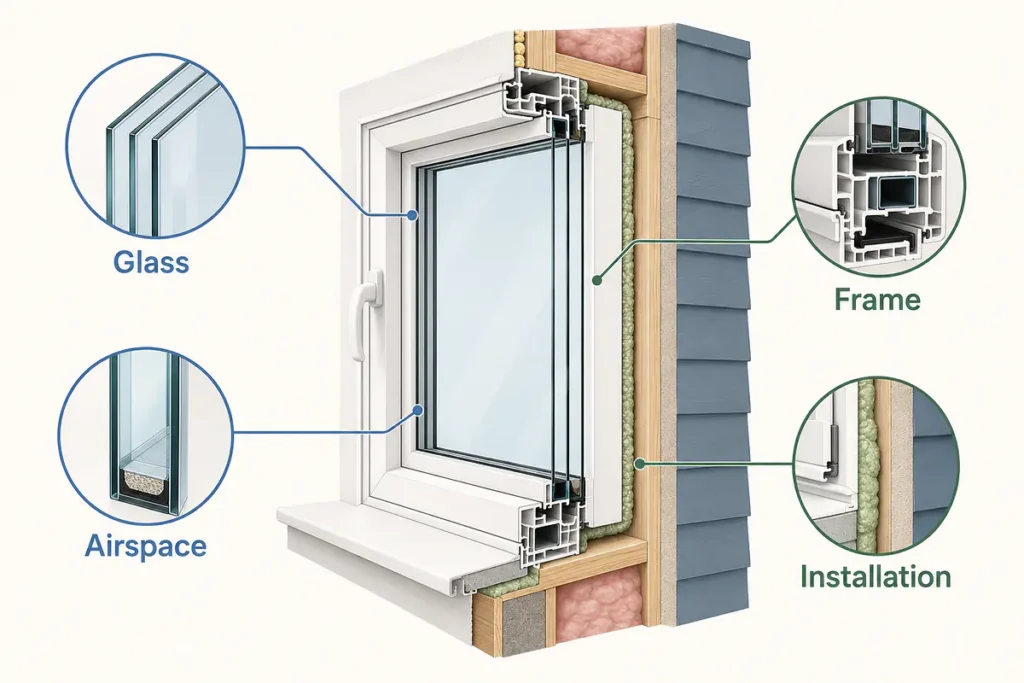
A standard triple-pane window may improve noise reduction, but it is not automatically the best acoustic choice. A carefully designed double-pane unit with laminated or different-thickness glass can sometimes perform better against a particular noise source.
The correct question is not simply, “Is it double-pane or triple-pane?” It is, “How was this complete window configured and tested?”
Homeowners comparing pane counts should first read our detailed double-pane versus triple-pane window guide.
Unwanted noise is more than an occasional annoyance when it enters a bedroom every night or interrupts work throughout the day. Health Canada notes that noise can affect mental health and well-being, while international health guidance also recognizes associations between excessive environmental noise, sleep disturbance and other health effects.
The effect is different in every household. One person may be most bothered by early-morning buses, while another hears aircraft, motorcycles or conversations from a neighbouring property. Bedrooms and home offices are usually more sensitive than hallways, storage rooms and other spaces where people spend less time.
Before selecting a window, identify:

This diagnosis matters because a product designed to reduce voices and higher-frequency sounds may not perform the same way against trucks, bass or aircraft.
“Soundproof window” is a popular search term, but “noise-reducing window” is usually the more accurate description.
Sound can travel through:
Replacing one component does not guarantee that every sound path will be corrected. A high-performing glass unit installed in a poorly sealed frame can still allow significant sound to enter. Likewise, replacing a window may produce a limited improvement if most of the noise is travelling through a wall, roof, vent or adjoining door.
The goal should be a meaningful and realistic reduction—not a promise of complete silence.
Be cautious when a company advertises that its windows block a fixed percentage of noise without first inspecting the home. Results depend on the original window, proposed configuration, installation, wall construction, noise frequency and how the percentage was calculated.
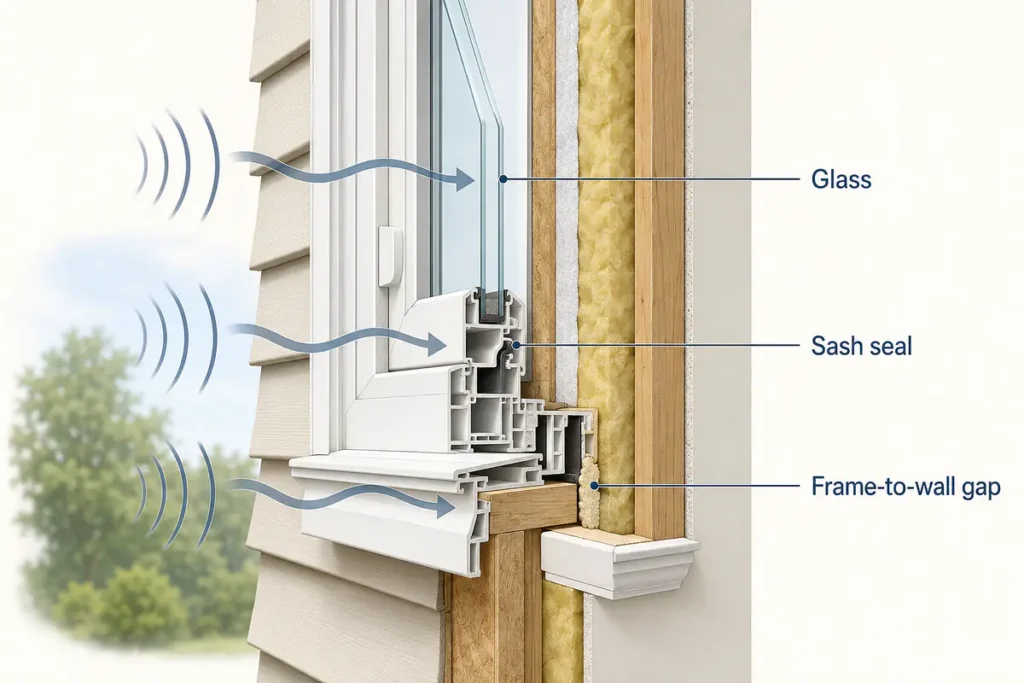
Noise and moving air often follow the same weak points. If outside air can pass through a damaged seal or an installation gap, sound can also use that opening.
The National Research Council of Canada’s guidance on sound transmission through windows specifically identifies air leakage as a concern, particularly for operable windows.
Common problem areas include:
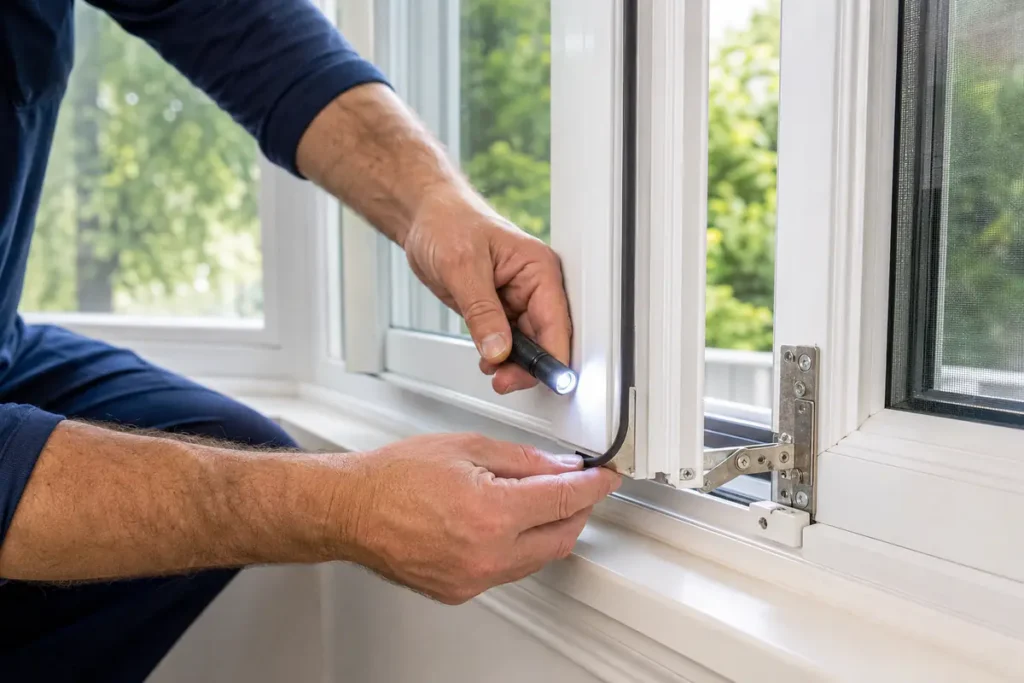
Sometimes adjusting the hardware or replacing weatherstripping provides a worthwhile improvement. However, those repairs cannot change the acoustic performance of thin glass, a damaged frame or an unsuitable window configuration.
Never seal over a window’s designed drainage or weep openings. Those openings help the window manage water and should not be confused with accidental installation gaps.
Two ratings may appear when comparing acoustic windows: STC and OITC. They are related, but they do not describe sound in exactly the same way.
The Fenestration and Glazing Industry Alliance recognizes both classifications in its technical guidance for sound control in windows and doors.
STC means Sound Transmission Class. It is commonly used to describe how effectively a building component reduces airborne sound over a defined frequency range.
STC can be helpful when evaluating sounds such as:
A higher tested STC generally indicates greater sound reduction within the frequencies included in that rating.
OITC means Outdoor-Indoor Transmission Class. It was developed specifically for sound travelling from outdoors into a building and gives more consideration to lower-frequency exterior noise.
That often makes OITC particularly relevant for:
Toronto homeowners living beside a highway, major road, transit route or flight path should not rely on STC alone when OITC information is available.

A center-of-glass rating does not necessarily represent the completed window. Frames, seals, hardware, unit dimensions and operating style all affect real performance.
Ask whether the number applies to:
If a salesperson cannot explain what was tested, do not treat the rating as a guaranteed result for your home.
Glass matters, but there is no single configuration that will be best for every home and every sound source.
Laminated glass contains an interlayer bonded between layers of glass. That interlayer helps dampen vibration and keeps glass fragments together if breakage occurs.
For noise control, laminated glass can be useful because it behaves differently from a standard single sheet of the same overall thickness. It may be included within an insulated double- or triple-pane unit, depending on the manufacturer and window system.
Laminated glass can also contribute to security, but it should not automatically be called burglar-proof. Security performance requires the glazing and complete assembly to be properly specified and, where applicable, tested.
For a broader explanation of secure glazing, locks and entry points, link this section to Imperial’s new Toronto home-security guide after that article has been published.
When both panes have the same thickness, they may respond similarly at certain frequencies. Using panes of different thicknesses can help prevent both panes from having identical acoustic weaknesses.
This is sometimes called:
The exact thicknesses should be selected by the manufacturer or a qualified professional based on the available window system and performance requirements. More glass is not automatically better unless the complete configuration works together.
Triple-pane windows are primarily selected for thermal comfort and energy efficiency. Natural Resources Canada’s window guidance shows that high-performing triple-glazed windows can achieve lower U-factors than many double-glazed products, meaning slower heat loss.
Acoustic performance is different. A triple-pane unit may reduce sound well, but the third pane does not guarantee that it will outperform every double-pane option. Pane thickness, spacing, lamination and the full window assembly all matter.
If noise and energy efficiency are both priorities, ask for:
The space separating layers of glazing can influence sound performance. A purpose-designed interior window insert or secondary window can create a much deeper airspace than a typical sealed glass unit.
Secondary glazing may be worth investigating when:
This is a specialized solution and should be evaluated separately from ordinary replacement windows.
Low-E coatings, argon and krypton are primarily energy-efficiency features. They can be valuable for thermal performance, but homeowners should not assume that they make a window an acoustic product.
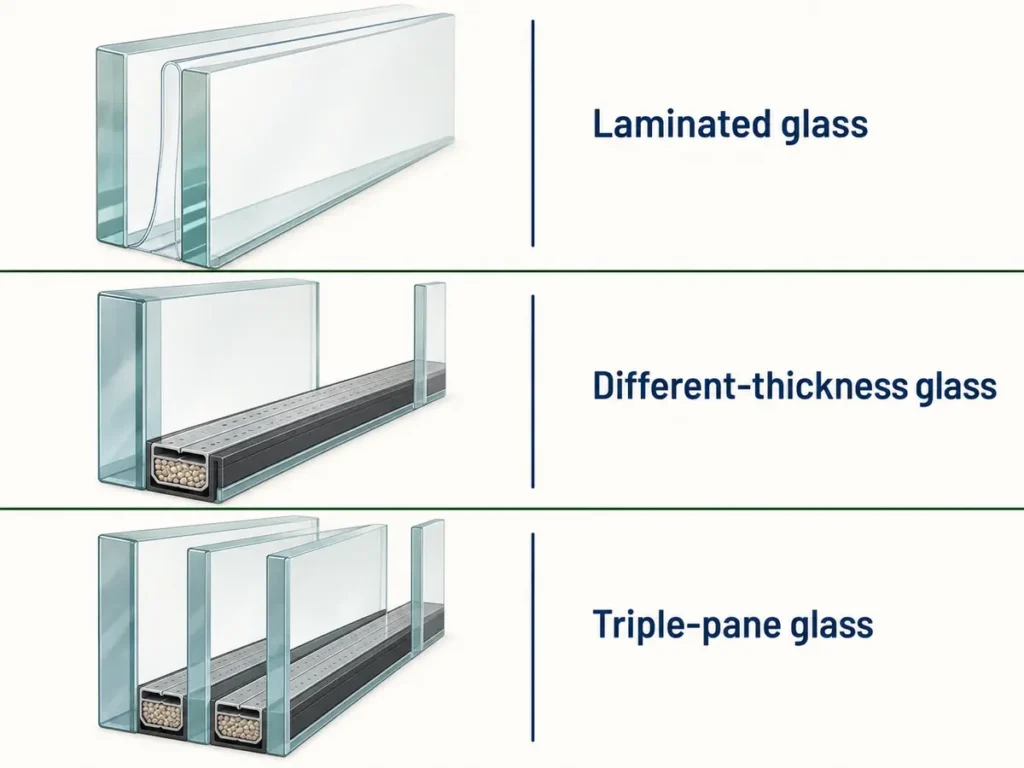
For noise reduction, request acoustic performance data rather than relying on an energy label.
Operating style matters because every movable joint creates another area that must remain sealed.
A fixed window does not open, so it has no operating sash joints. This can make it a strong choice for noise-sensitive spaces when ventilation and emergency escape are not required.
Fixed windows work well in:
Do not replace a required emergency escape opening with a fixed window without confirming the applicable building and fire-safety requirements.
Casement windows close against compression weatherstripping and can form a tight seal when the sash, locks and hardware are properly adjusted.
They are often a practical choice for:
Awning windows use a similar compression-seal principle but are hinged at the top. They can work well in smaller openings, kitchens and bathrooms where ventilation is important.
Sliding windows and hung windows move along tracks. They can still provide good performance, but their sliding seals and drainage design differ from compression-seal windows.
If noise reduction is the main priority, compare the tested full-window ratings instead of assuming that every style using the same glass will perform identically.
A useful compromise is a large fixed center window with smaller casement windows on the sides. This configuration provides:
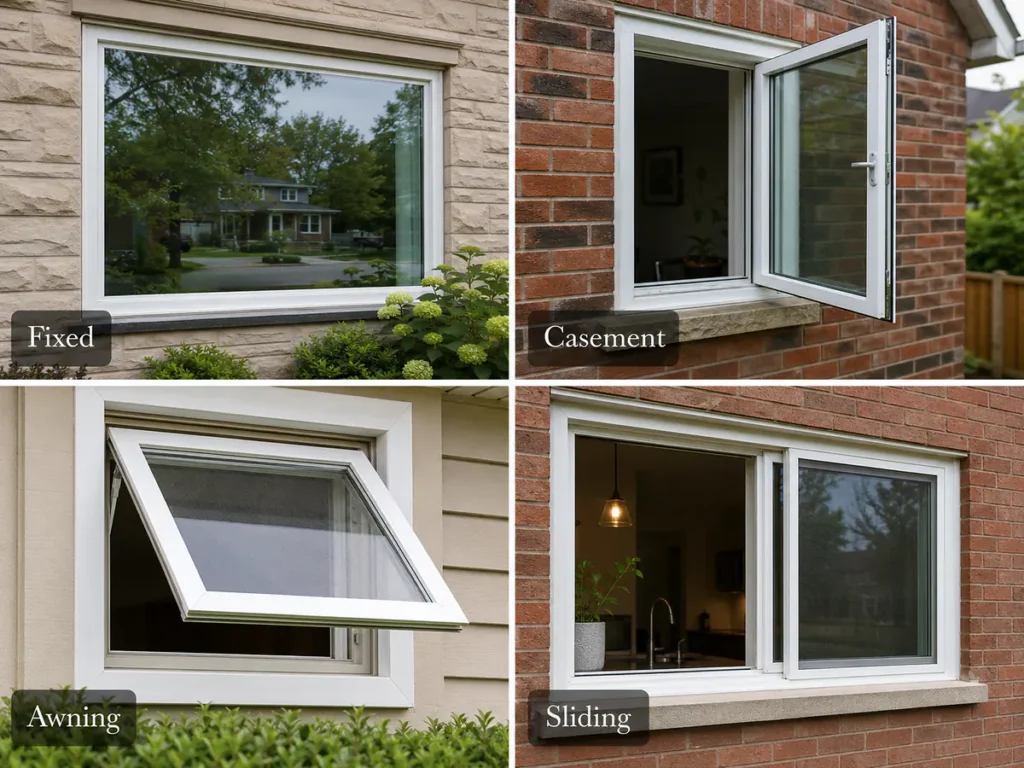
The best configuration depends on the room, opening size, ventilation needs and applicable egress requirements.
A premium glass package will not perform as intended if the window is measured incorrectly, installed out of square or left with gaps around the frame.
Professional window installation should address:
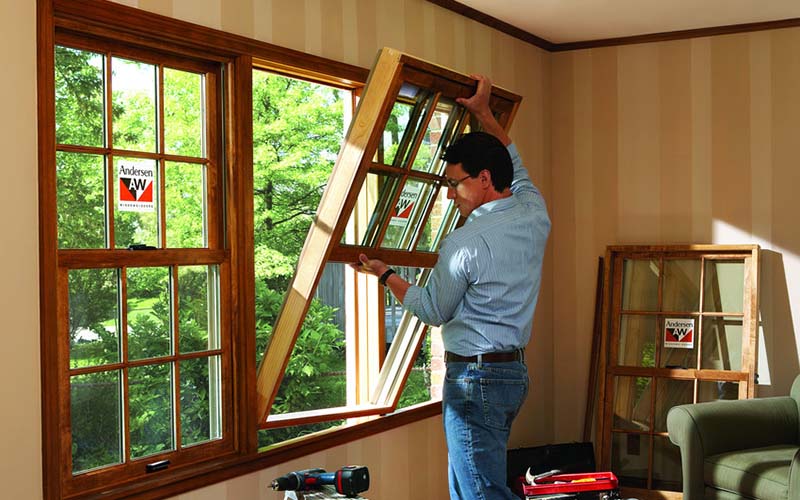
A retrofit window is installed within an existing frame. It can be a suitable and economical choice when the original frame is structurally sound, dry and properly sealed.
However, retrofit installation cannot expose or correct every hidden problem surrounding the original frame.
A full-frame installation removes the old window and frame down to the rough opening. This allows the installer to inspect the surrounding area and address deteriorated material, missing insulation or installation gaps.
Full-frame replacement may be appropriate when:
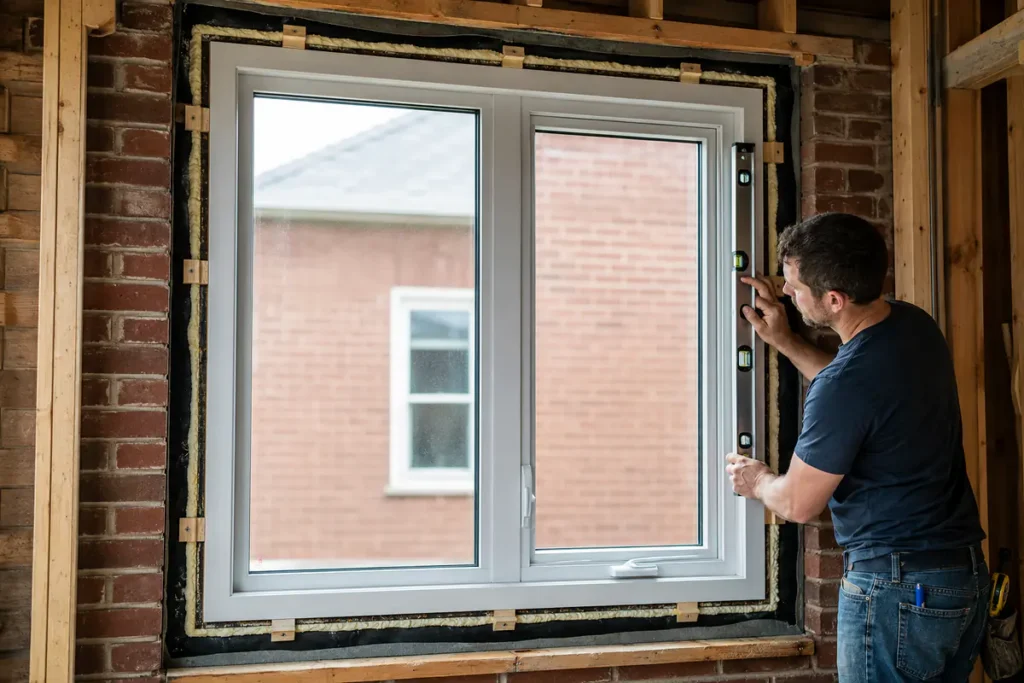
Brick-to-brick installation is not automatically necessary for every acoustic project. The decision should be based on frame condition and the home’s requirements—not a sales rule applied to every opening.
Replacing windows may not fully correct a noisy room if a nearby exterior door remains the weaker part of the wall.
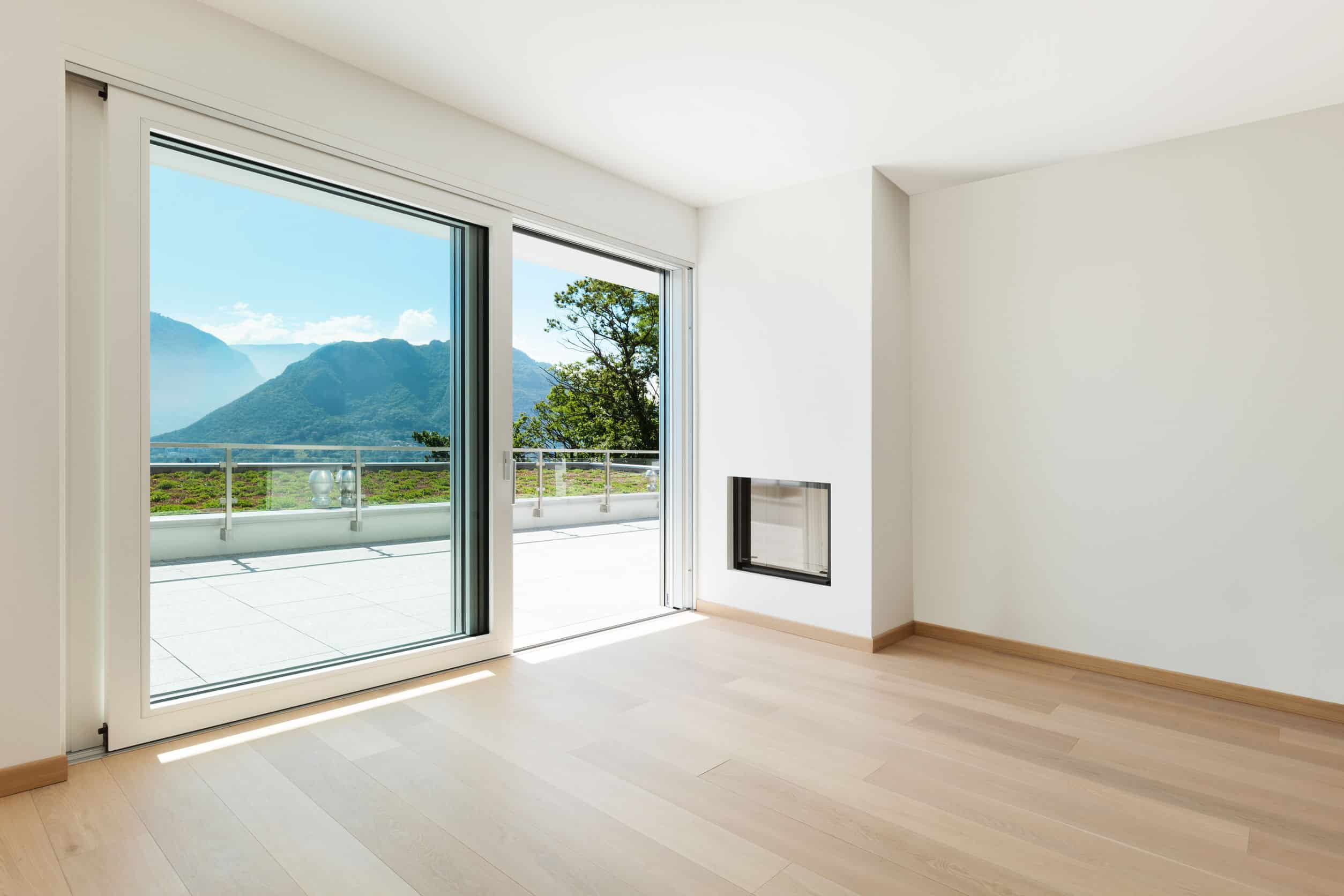
A sliding patio door contains a large glass area and several operating seals. Noise performance can be affected by:
A door that rattles, moves excessively in its frame or does not lock tightly should be inspected. Depending on the available system, laminated or upgraded glass may also be considered.
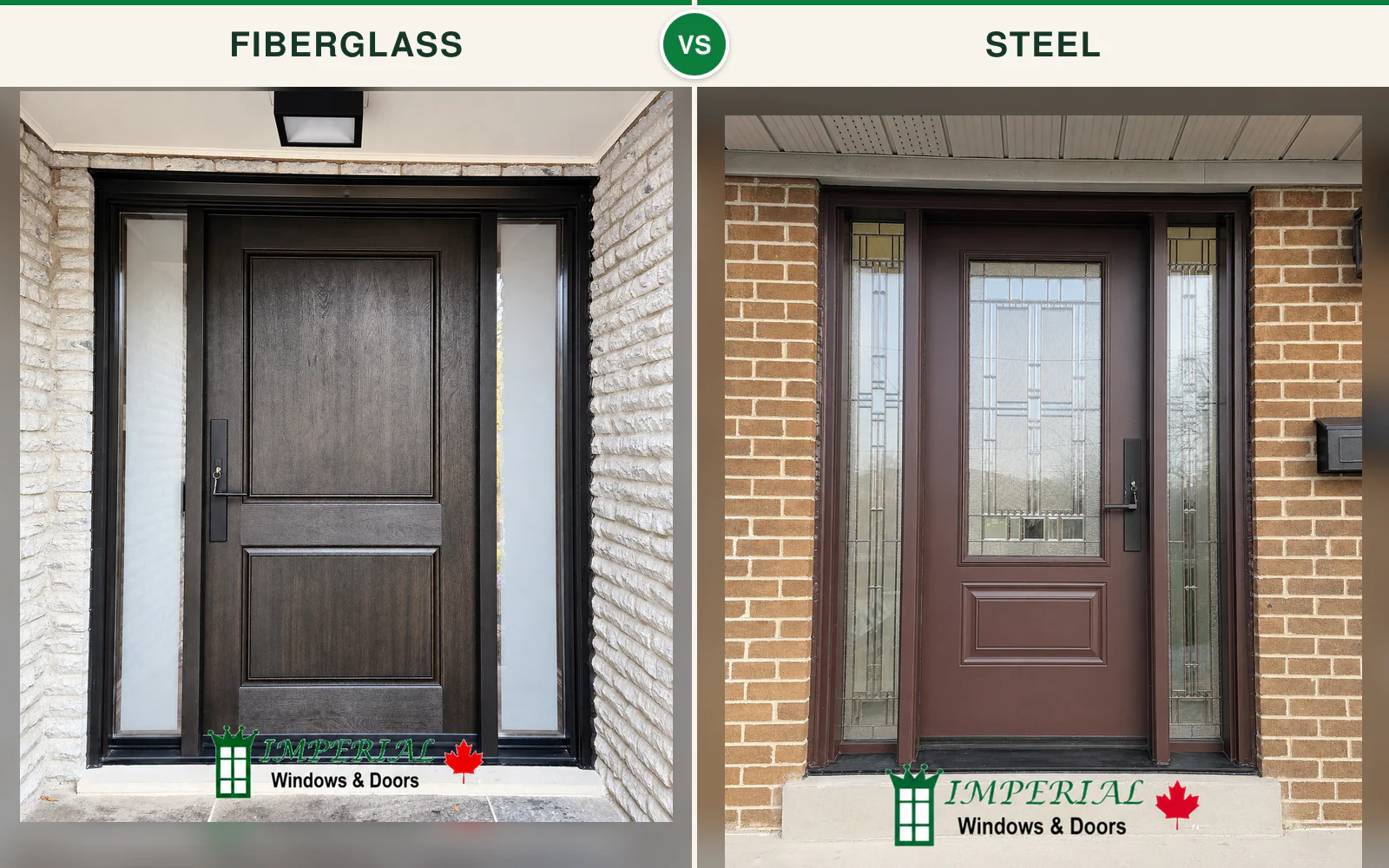
An entry door can allow noise through its slab, glass insert, frame, weatherstripping or bottom sweep.
A quieter entrance generally requires:
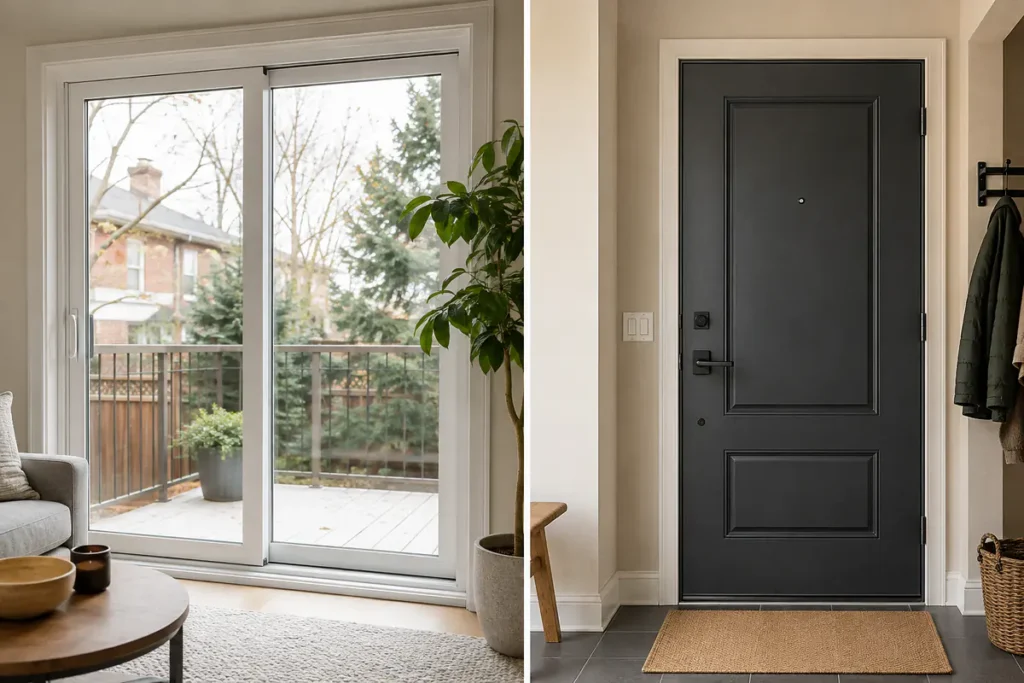
Homeowners replacing both windows and doors can explore Imperial’s range of entry doors and coordinate the upgrades as one exterior-envelope project.
Traffic contains a broad range of frequencies, including lower-frequency engine and tire noise.
Priorities may include:
Heavy trucks and motorcycles may remain audible even after a substantial improvement. The goal is to reduce their intrusion, not promise complete elimination.
Transit noise may combine wheel, brake, vibration and warning sounds. Different parts of that noise spectrum may require different solutions.
Inspect the entire affected wall rather than assuming the glass is the only path.
Aircraft noise can affect the entire building envelope, including windows, doors, walls, ceilings and roof assemblies. Upgrading windows may help, but severe aircraft-noise problems can require a broader building assessment.
For homes under a significant flight path, consider speaking with a qualified acoustical consultant before placing a large order.
STC information may be useful when voices and other common airborne sounds are the main concern. Airtightness still matters because speech can travel clearly through small openings.
Impact, vibration and bass can travel through walls and structural connections. A new window may provide only a partial improvement when the dominant path is not the window opening.

An acoustical consultant can help identify flanking paths in difficult cases.
Replacing every window with the most expensive glass package is not always necessary. Prioritize the rooms where noise causes the greatest disruption.
Bedrooms usually deserve first priority because intermittent nighttime noise can disturb sleep.
Consider:
For a home office, voices, traffic and construction may interfere with calls and concentration. A fixed-and-casement combination can provide a strong seal while preserving ventilation.
Large picture and combination windows can represent a substantial portion of an exterior wall. Consider the complete size of the opening and any patio door within the same room.
Noise may be less critical than ventilation and moisture control. An awning or casement window can provide ventilation while maintaining a compression seal when closed.
Basement noise may enter through small windows, window wells, vents or above-grade wall areas. Security and emergency escape requirements must also be considered when choosing the replacement style.

Not every noise complaint requires immediate window replacement.
Repair or adjustment may be reasonable when:
Temporary measures may include heavier curtains, cellular shades or removable interior panels. These products may make a room feel less reflective and can provide a limited improvement, but ordinary curtains should not be expected to perform like tested acoustic glazing.
Replacement becomes more reasonable when:
A professional inspection can help determine whether the problem is repairable or whether complete replacement windows are the better long-term solution.
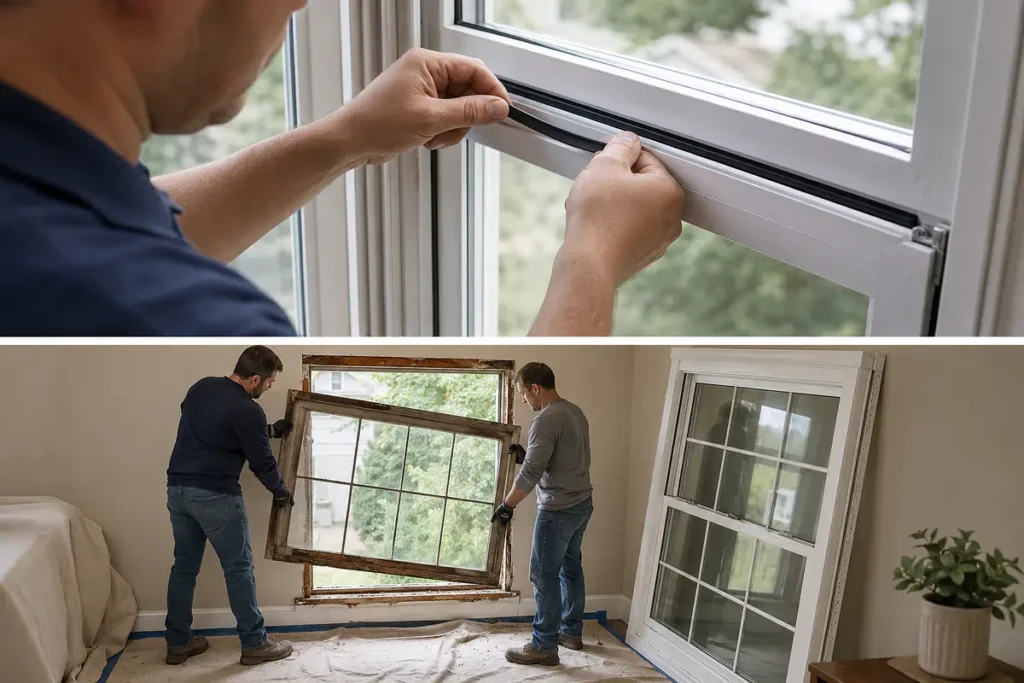
A good quotation should explain the proposed solution instead of relying on the word “soundproof.”
Ask the window company:
Be cautious if a company guarantees silence, gives the same percentage to every home or refuses to identify the actual glass package.
Homeowners comparing contractors can also review our guide to the best window companies in Toronto and learn which details should appear in a proper quotation.
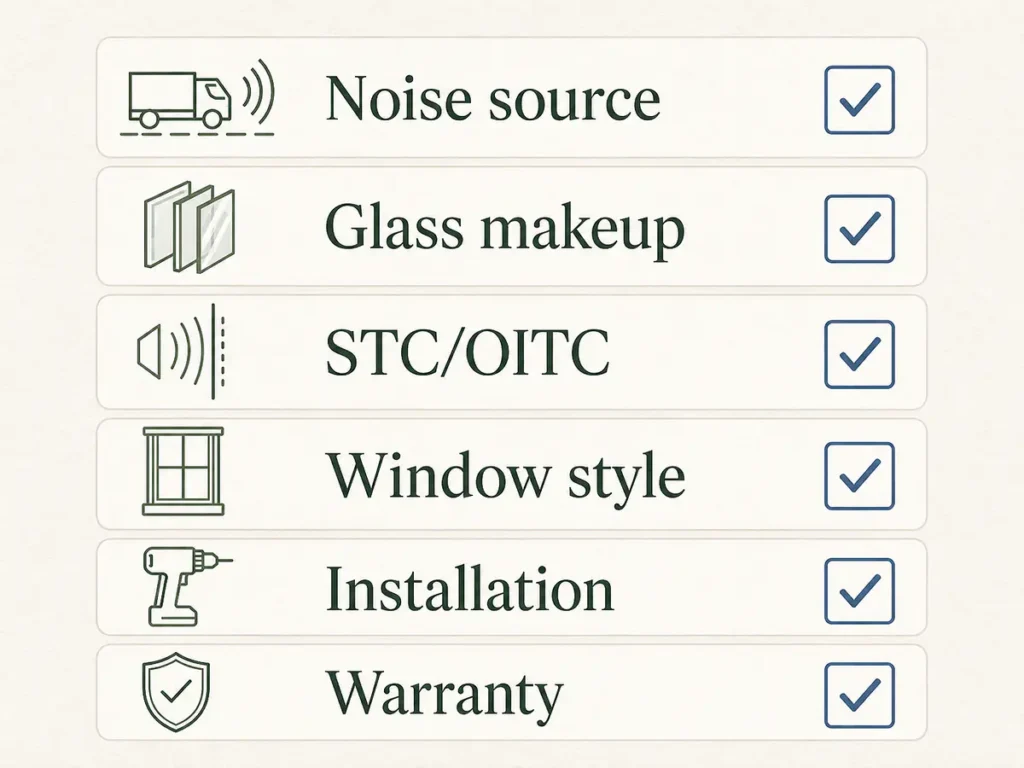
There is no single price for an acoustic window upgrade. The final cost can be affected by:
Laminated and specialty glass generally increase the price and may require additional manufacturing time. The upgrade should be targeted toward the rooms and openings where it will provide the most value.
For realistic installed-window pricing, review Imperial’s complete window replacement cost guide for Toronto.
Homeowners replacing windows for energy efficiency as well as comfort should also review the current Ontario window and door rebate information before ordering. Rebate eligibility is based on the program’s energy requirements and process—not simply whether a window includes an acoustic upgrade.
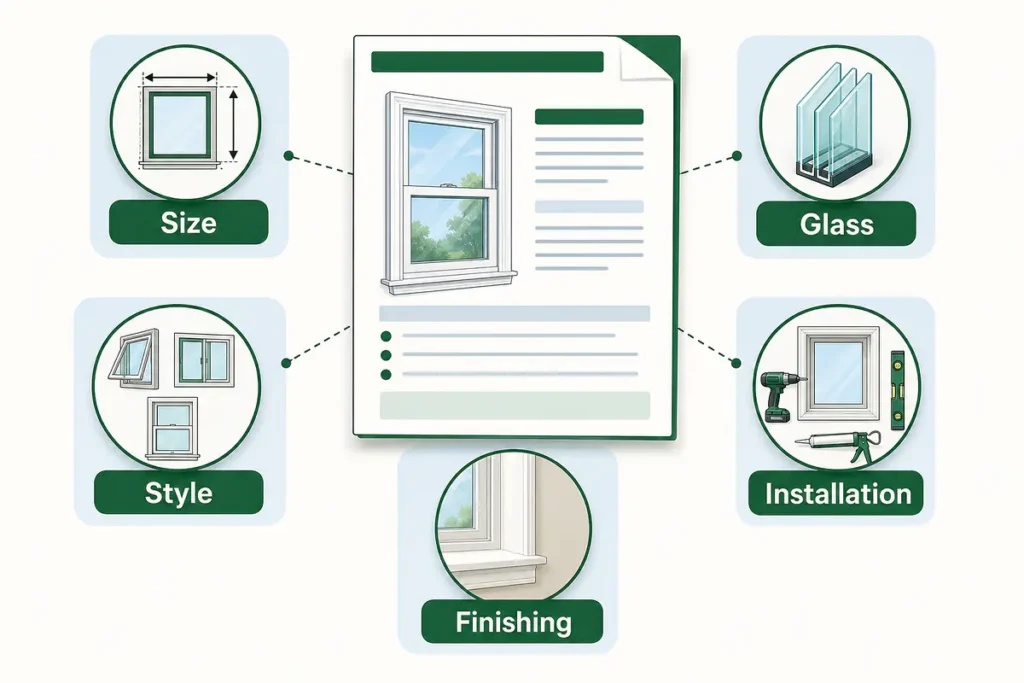
Imperial Windows & Doors provides professionally installed vinyl replacement windows for homeowners throughout Toronto and the GTA.
Because every noise problem is different, we begin by discussing:
We work with established window manufacturers, allowing us to compare suitable options instead of forcing every home into one product line.
We will also be honest when a window alone may not solve the entire problem. Imperial is a window and door replacement company—not an acoustical engineering firm. For severe aircraft, industrial, vibration or low-frequency noise, we may recommend that the homeowner obtain an acoustical assessment before making a large investment.
Our goal is to provide a properly specified and professionally installed window system with realistic expectations.

Traffic and neighbourhood noise are not limited to downtown Toronto. Homes near highways, regional roads, rail corridors, commercial areas and flight paths throughout the GTA can experience similar concerns.

Imperial provides window and door replacement services in:
The recommended glass and installation method should be based on the home—not simply the municipality.
No ordinary residential window can guarantee complete silence. A properly selected and installed window can reduce outside noise, but sound may still travel through walls, doors, vents, ceilings and other parts of the building.
Laminated glass and glass panes with different thicknesses are often considered for traffic noise. However, homeowners should request OITC information for the complete proposed window rather than choosing glass by name alone.
It depends on the exact configurations. Laminated glass provides vibration-damping properties, while triple-pane glass is primarily associated with thermal performance. A laminated or asymmetrical double-pane unit may outperform some standard triple-pane units acoustically, but full-window test information provides the best comparison.
Triple-pane windows can reduce outside noise, but the third pane does not automatically make them the best acoustic option. Pane thickness, spacing, lamination, frame design, seals and installation all affect performance.
STC is commonly used for airborne sounds such as speech, while OITC gives more consideration to lower-frequency exterior sounds such as traffic and aircraft. For Toronto homes near busy transportation routes, OITC can be particularly useful.
Casement windows often form a strong compression seal when closed and properly adjusted. Sliding windows use track and sliding-seal systems. However, the actual acoustic performance should be compared using full-window ratings for the proposed products.
Fixed windows have no operating sash joints, which can make them a strong option for noise reduction. They are not appropriate where ventilation or an emergency escape opening is required.
Glass-only replacement may be possible in some window systems, but the existing frame, hardware and seals will still affect performance. If the frame leaks air, is damaged or cannot support the required glass unit, complete replacement may be more appropriate.
Ordinary security or solar film should not be treated as a substitute for an acoustically designed laminated glass unit. Film may provide other benefits, but homeowners should request tested acoustic data before relying on it for noise reduction.
Heavy curtains may reduce room reflections and soften some higher-frequency sounds, but they do not seal the window opening or significantly change the glass assembly. They should be considered a supplementary measure, not an equivalent replacement for acoustic glazing.
Suitable windows can help, but aircraft noise may also travel through the roof, walls, doors and ventilation openings. Homes with severe aircraft-noise exposure may benefit from an assessment of the complete building envelope.
A window may qualify if it meets the program’s current energy-efficiency and installation requirements. The acoustic upgrade itself does not determine eligibility. Homeowners should confirm all program steps and product requirements before purchasing.
Noise-reducing windows can be a worthwhile investment when traffic, aircraft or neighborhood activity is disrupting sleep, concentration or everyday comfort.
The strongest results come from treating the window as a complete system:
The right window should improve more than noise. It should also provide energy efficiency, reliable operation, security, weather resistance and long-term value.
If outside noise is affecting your Toronto or GTA home, contact Imperial Windows & Doors for a free window replacement estimate. We will help you examine the available window styles, glass configurations and installation options so you can make an informed decision without unrealistic promises.


Imperial Windows and Doors have long been serving our valued clients for over 10 years to be exact. We strive to deliver our clients only the finest solutions guaranteed to suit their needs, style, preferences and budget.

Imperial Windows & Doors provides professionally installed replacement windows, entry doors and patio doors for homeowners across Toronto and the GTA.