Get inspired for your next home improvement projects by browsing through our blog posts, which are full of great tips, valuable advice, and industry insights.

Blog
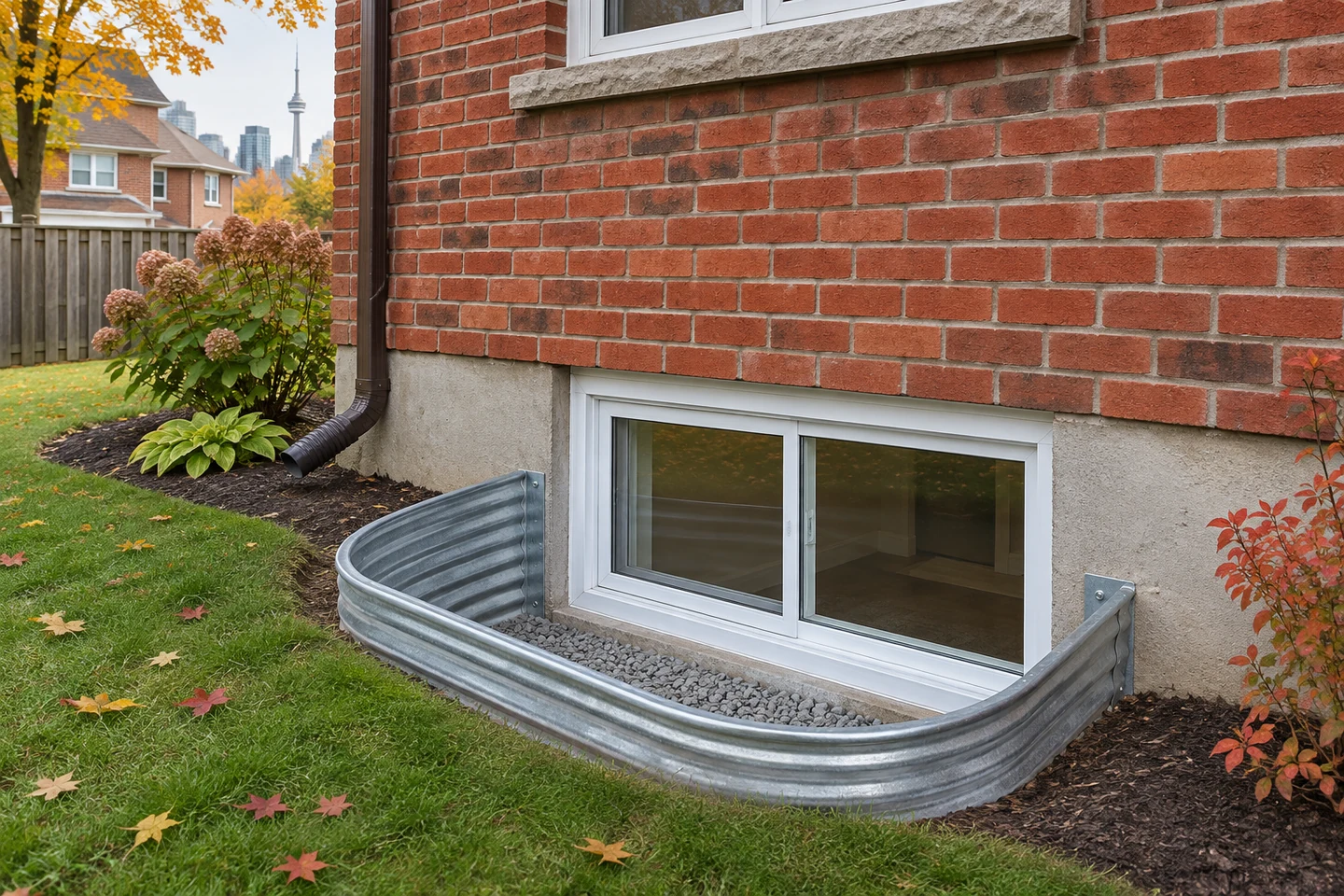
Basement window replacement in Toronto needs more planning than matching the old frame size. The window sits close to soil, rain splash and sometimes a window well, while the room behind it may be changing from storage to everyday living space. A unit that fits the wall is only part of a successful project.
Before ordering, check the existing opening, the route water takes around it and how the basement will be used. These seven checks help you discuss a complete scope with your installer and avoid choosing the product before the important site questions are answered.
Start with the intended room use: storage, laundry, a home office, a family room or a proposed bedroom. Note whether the priority is daylight, everyday ventilation, easier operation or replacement of a deteriorated frame. Tell the installer about planned renovations before final measurement.
If a bedroom or additional dwelling unit is proposed, assess the relevant building and escape requirements as part of that project. Buying a window described as “egress” does not, by itself, establish that the installed room or basement meets the requirements. The complete layout and installed opening matter.
Our basement window replacement service is a starting point for discussing the available products and an assessment of your existing openings.
Look beyond the glass. An older wood frame may be soft or deteriorated, while an older metal frame may be corroded. Check the visible sill, interior trim and surrounding concrete, block or masonry for staining, gaps or damage. Photograph both sides of the opening, including any finishes that hide the frame edges.
Ask which components the proposed installation removes and which remain. Retaining a sound frame is a different scope from removing a deteriorated assembly and rebuilding the connection to the wall. Interior finishing can also affect access and the amount of trim that needs to be restored.
Do not measure only the visible glass or order from a rough homeowner measurement. Final product sizing should follow an assessment of the actual opening, the installation method and the condition of the surfaces that will support and seal the new window.
A water stain near a basement window does not identify the cause on its own. The window, perimeter joint, window well, surface grading and nearby foundation can all need attention. Note whether water appears during heavy rain, snowmelt or another repeatable condition, and share those observations at the assessment.
A replacement window is not a substitute for solving an overflowing well or another water-management problem. For a separate troubleshooting overview, see our guide to leaking windows.
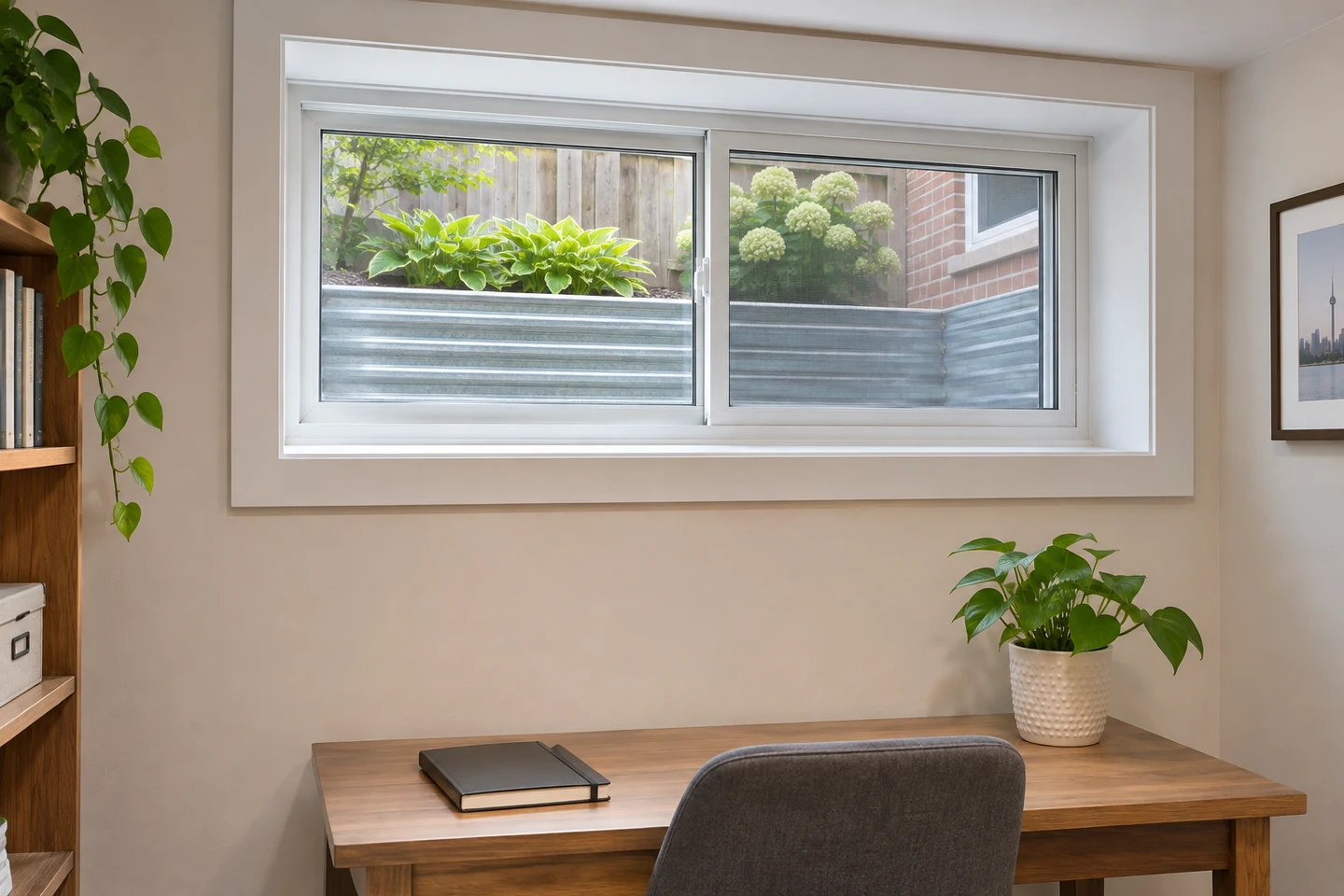
Record the window well’s shape, depth and available space in front of the sash. A crank-operated window needs room for its moving sash; a horizontal slider does not swing outward, but its clear opening is smaller than the total frame opening. Compare the exact proposed configuration, not just the product name.
For a potential bedroom escape route, ask for the actual unobstructed opening dimensions and confirmation of the applicable requirements for the project. Consider the well and the route beyond it too. Do not assume that a larger-looking frame, removable screen or different handle automatically makes an existing arrangement suitable.
Well covers, grilles and other accessories must be considered with the intended use and safe operation. Resolve those details before ordering rather than treating them as a finishing decision afterward.
A sliding window is often worth comparing for a wide, low opening. An awning or casement configuration may suit a different opening and clearance arrangement. A fixed unit provides daylight but cannot be opened for ventilation. Operate a sample where possible and ask how screens are removed and the glass is cleaned.
Windows can contribute ventilation when conditions allow, but they do not replace a plan for controlling basement humidity. Persistent dampness needs its own assessment. Choose privacy glass only after considering daylight, exterior visibility and the room’s use.
For energy performance, compare the ratings for the exact whole-window product and glass configuration. Our window energy ratings guide explains U-factor, solar heat gain and ER without treating the number of panes as the entire decision.
The City of Toronto’s permit guidance lists enlarging or relocating existing windows as work requiring a building permit. It also describes a same-opening replacement exemption for certain houses containing one dwelling unit, provided the opening’s location and size stay unchanged, its structural support is unaffected and no new exit is created.
Confirm the requirements for your particular project before ordering or cutting the wall. A basement conversion, new exit or additional dwelling unit may involve a broader approval process. Other GTA municipalities have their own application procedures. For a fuller overview, use our Toronto window permit guide and check the proposed work with the local building department.
A useful estimate should identify more than the window’s width and height. Ask for the exact product, operating style, glass, screens, frame colour and installation method. Confirm whether removal, disposal, insulation, sealing and interior or exterior trim are included.
Where the project needs work to the well, drainage, opening or surrounding finishes, identify who is responsible and when it happens. Ask how hidden damage found during removal will be documented and quoted. Do not assume that excavation, structural changes or waterproofing are included in a standard window price.
Imperial Windows & Doors supplies and installs residential replacement windows across Toronto and the GTA. Request a free basement window estimate and share photos of the interior opening, exterior wall and window well so the discussion can cover the complete site conditions.
Often, a replacement can fit the existing opening. Have the frame, surrounding wall and intended room use assessed first. A same-size unit may provide a different clear opening, so confirm the actual product dimensions before ordering.
Not necessarily. Water can come from a failed window, the installation joint, an overflowing window well, grading or the surrounding foundation. Identify the route and include the appropriate drainage or building-envelope work in the project.
No. An opening sash alone does not establish that a window is suitable for a bedroom escape route. The actual unobstructed opening, operation, window well and applicable project requirements need to be checked before the product is ordered.
Toronto lists enlarging or relocating a window opening as work requiring a permit. Some same-opening replacements in houses containing a single dwelling unit do not require one if the City’s conditions are met. Confirm your particular work with Toronto Building, especially if it involves a new exit or basement conversion.

Imperial Windows and Doors have long been serving our valued clients for over 10 years to be exact. We strive to deliver our clients only the finest solutions guaranteed to suit their needs, style, preferences and budget.

Imperial Windows & Doors provides professionally installed replacement windows, entry doors and patio doors for homeowners across Toronto and the GTA.