Get inspired for your next home improvement projects by browsing through our blog posts, which are full of great tips, valuable advice, and industry insights.

Blog
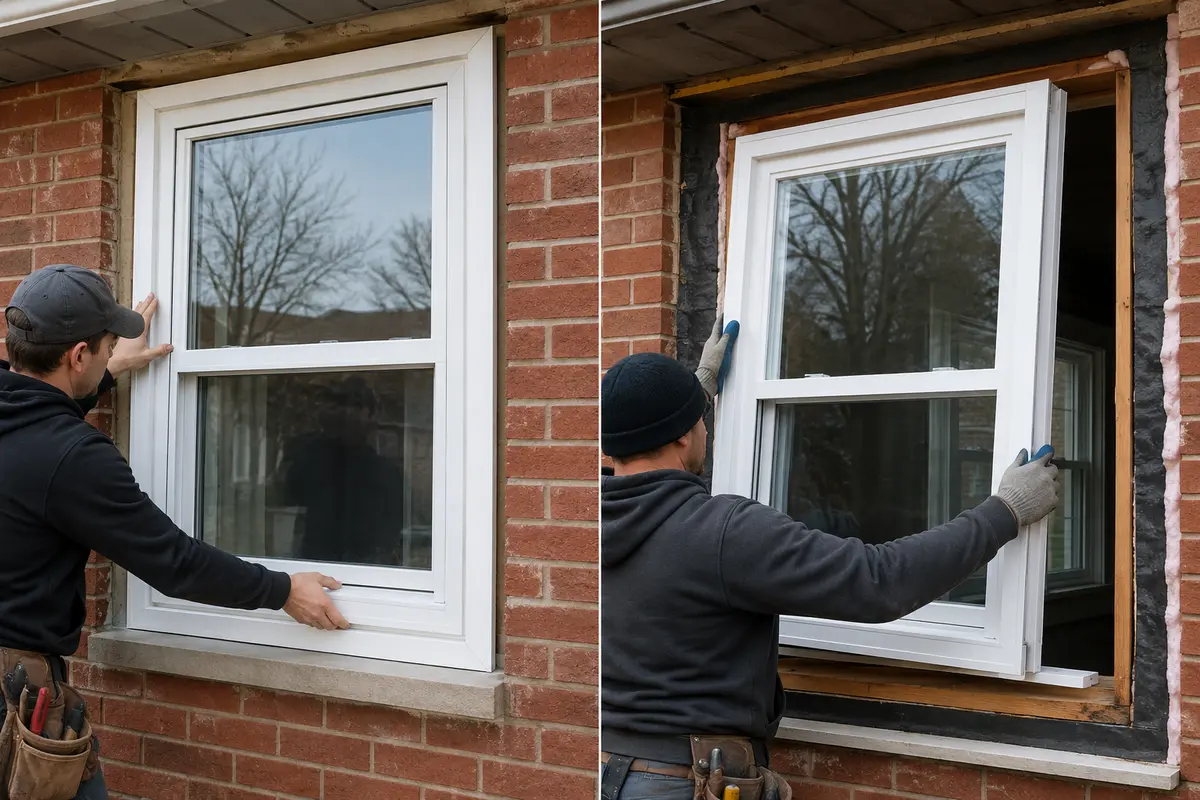
Two window replacement quotations can include similar-looking products and still describe very different projects. One contractor may propose installing a new replacement window inside the sound existing frame. Another may plan to remove the entire old window and rebuild the opening with new interior and exterior finishing.
These methods are commonly called retrofit and full-frame replacement. In Toronto, full-frame work is also frequently described as brick-to-brick installation. The terminology sounds simple, but the real difference is not the name on the quote. It is exactly what will remain, what will be removed, how the opening will be insulated and sealed, and which finishing work is included.
Neither method is automatically right for every home. A correctly planned retrofit installation can provide excellent results when the retained frame is dry, solid, square and suitable for reuse. Full-frame replacement is normally the better choice when the old frame is deteriorated, poorly insulated, leaking, badly altered or simply not worth preserving.
This guide explains retrofit versus full-frame window replacement in Toronto, including cost, glass area, energy efficiency, installation time, interior trim and the warning signs that should affect your decision.
Choose retrofit window installation when the existing perimeter frame is in sound condition and can support a correctly sized, insulated and sealed replacement window. Retrofit generally involves less removal, less finishing work and a lower installation cost.
Choose full-frame or brick-to-brick replacement when the existing window frame is damaged, rotten, leaking, poorly insulated, significantly out of square or unsuitable for the new window. Full-frame installation exposes more of the opening and allows the contractor to replace the complete window system and surrounding finishes.
The best method depends on the condition of each opening—not only the age of the house or the price of the quotation.
A replacement window does not perform by itself. The complete result depends on the product, the condition of the opening, the way the window is fastened, the insulation around it, the exterior water-management details and the interior finish.
That is why a lower-priced window quote is not automatically the better value. It may include a different installation scope. A quotation for a retrofit project cannot be compared fairly with a quotation for a complete full-frame removal unless you understand the work included in each.
For homeowners planning window replacement in Toronto, the written quote should answer four basic questions:
If those answers are unclear, the installation method is not adequately described.
A retrofit installation fits a complete new replacement window within a suitable existing window frame. The operating sash, glass and other old components are removed as required, but the sound perimeter frame remains part of the opening.
The new window is custom-sized to fit within the retained frame. It is then positioned, levelled, fastened, insulated and sealed according to the conditions of the opening and the window manufacturer’s installation requirements. Existing trim may remain, and new exterior capping or finishing may be installed where included.
The word retrofit is used inconsistently. One company may use it to describe a complete new window and frame installed within the old perimeter frame. Another may use similar language for sash-only replacement, glass replacement or a more limited alteration.
These are not the same scope of work.
Before accepting the quotation, ask the contractor to confirm that you are receiving a complete replacement window unit and identify every old component that will remain. Do not rely on terms such as retrofit, insert, pocket replacement or replacement window without a written description.
The exact process varies by window, but it normally includes:
Less removal does not mean the work can be rushed. Accurate measurements, correct clearances, proper fastening and continuous sealing are still essential.
Retrofit installation can offer several practical advantages:
The limitations are equally important:
A retrofit is not a repair for a failing opening. It is a replacement method for an opening whose retained components are suitable for reuse.
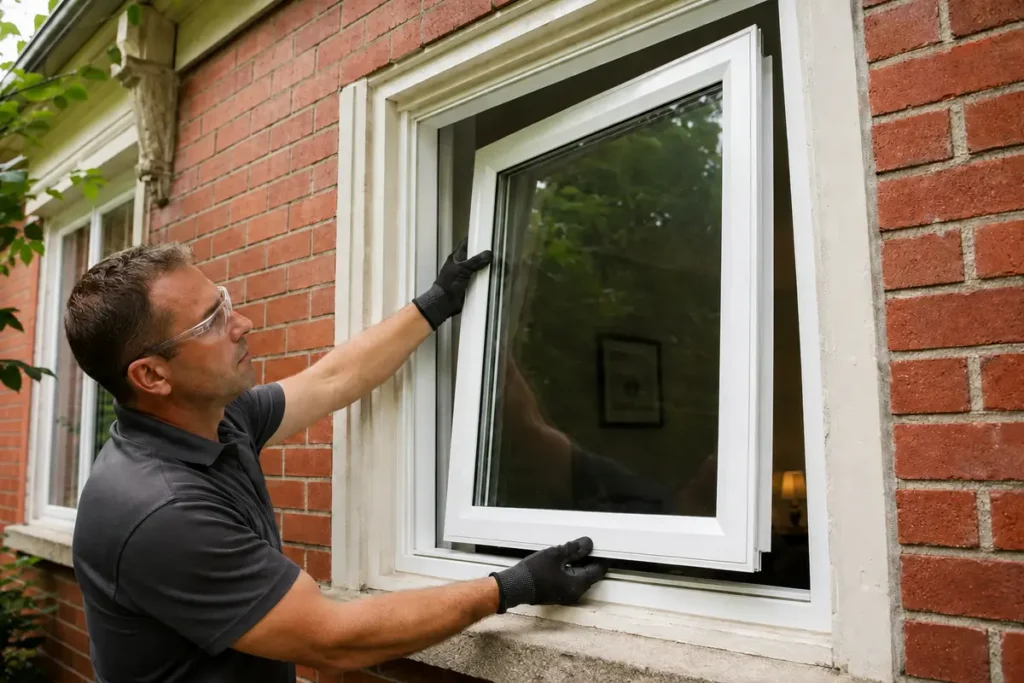
Full-frame replacement removes the complete existing window system, including the old perimeter frame, back to the prepared opening. In a Toronto brick home, contractors often call this brick-to-brick replacement because the window is removed across the complete masonry opening.
Removing the old frame exposes areas that remain covered during a retrofit. The installer can inspect the surrounding materials, identify deterioration, prepare the opening and install a complete new window system with new insulation and finishing.
The terms are often used interchangeably, but homeowners should still ask for the actual removal and finishing scope. Construction differs between brick, siding, stucco, stone and other exteriors. A full-frame project on one home may require different flashing, trim, capping or jamb work than a full-frame project on another.
The quote should not merely say “brick-to-brick.” It should identify:
A full-frame project commonly includes:
Full-frame replacement provides the opportunity to:
The more extensive scope also means:
Full-frame replacement should not be sold merely as the “premium” option. It should be recommended when the condition of the opening or the homeowner’s goals justify the additional work.
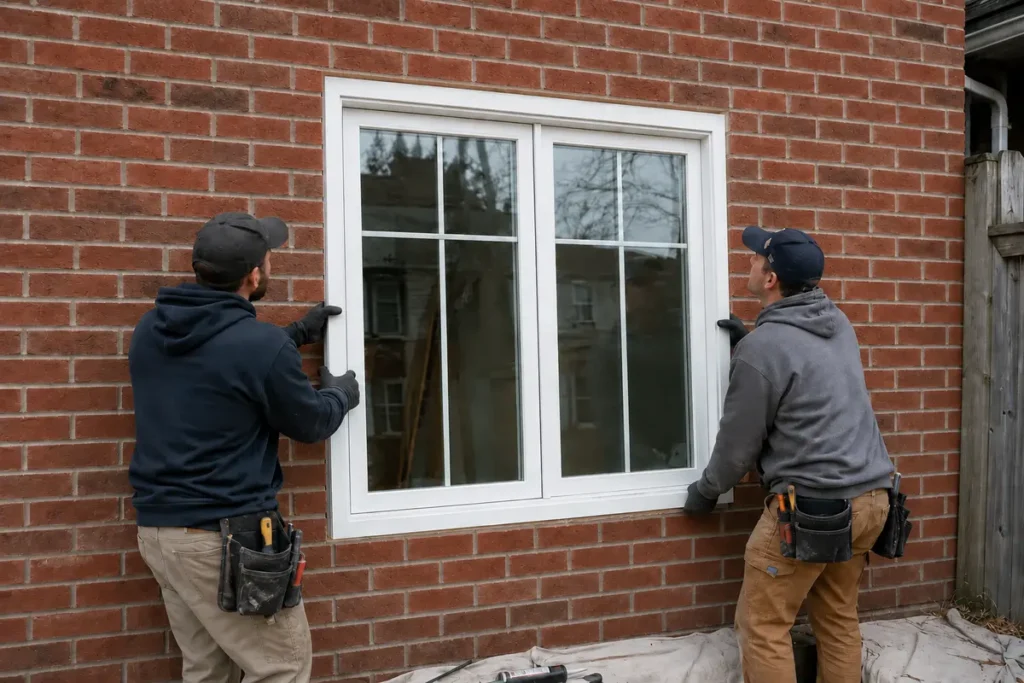
The visible window may look similar after either installation, but the work behind the finish is different.
With retrofit installation, the suitable existing perimeter frame remains and becomes part of the completed assembly. With full-frame installation, the entire old window and frame are removed.
This is the most important difference to confirm in writing.
Retrofit allows the installer to inspect accessible portions of the retained frame. It does not expose every surface behind that frame.
Full-frame removal exposes more of the opening, making it easier to identify old insulation, staining, deterioration or installation problems. However, even full-frame removal does not automatically explain the source of every water issue. Roofs, walls, flashing, masonry and other building components can also contribute.
A retrofit unit sits inside the old frame, so the combined frame dimensions can reduce the visible glass area. The amount depends on the existing frame, new window design and measurements.
Full-frame replacement usually provides more flexibility to maximize glass within the existing structural opening. It does not necessarily make the opening itself larger. Altering the structural opening is a separate scope that may require design work, approvals and additional trades.
Retrofit projects can often preserve more existing casing and jamb material. This may be useful when the trim is attractive, difficult to match or integrated with nearby finishes.
Full-frame projects commonly require new jamb extensions, casing and paint-ready finishing. Confirm whether painting, staining and wall touch-ups are included or left to the homeowner.
Retrofit installations may use new exterior aluminum capping or other finishing over suitable retained components. The capping should be shaped and sealed to protect vulnerable materials and direct water correctly.
Full-frame replacement may include new brickmould, trim, flashing details or capping. The appropriate finish depends on the wall and window system.
Retrofit normally requires less removal and can often be completed faster. Full-frame replacement takes longer because the old frame and finishes must be removed and rebuilt.
The schedule also depends on window size, floor level, access, style, surrounding materials and the condition discovered after removal. Our window replacement process in Toronto explains what happens from final measurement through cleanup and inspection.
Retrofit normally costs less because it requires less demolition and finishing. Full-frame replacement normally costs more because it includes additional removal, preparation, insulation and trim work.
The difference cannot be calculated accurately from window count alone. For current budgeting information, see our complete window replacement cost guide for Toronto.
No. Full-frame replacement provides a more complete removal, but more work is not automatically better when the retained frame is sound and the retrofit can be installed correctly.
Removing a high-quality, stable frame can create unnecessary cost and disturbance. A properly selected retrofit may provide the performance, appearance and operation the homeowner needs while preserving good materials.
Full-frame replacement becomes the stronger choice when leaving the old frame would preserve a weakness, restrict the new window, reduce too much glass or prevent proper insulation and sealing.
The goal is not to choose the largest scope. It is to choose the scope that solves the actual condition of the opening.
Not inherently. Retrofit describes what remains, not the quality of the window or workmanship.
A high-quality replacement window installed carefully within a suitable frame can perform very well. Conversely, an expensive full-frame window can still develop problems if it is measured incorrectly, poorly fastened, inadequately insulated or badly sealed.
Retrofit becomes a poor choice when:
Full-frame becomes poor value when it is recommended without inspecting the frame or explaining why complete removal is necessary.
Neither label guarantees energy efficiency. Performance depends on the complete window, the condition of the opening and the quality of installation.
A well-installed retrofit can be energy-efficient when the retained frame is stable, insulated and properly integrated with the new unit. A full-frame replacement can provide a stronger opportunity to renew the insulation and air seal around the complete frame, particularly when the original opening has gaps or deterioration.
Natural Resources Canada advises that the appropriate choice can be either total window-and-frame replacement or a high-performance insert, depending on the condition of the existing window and frame. Its Keeping the Heat In guide also emphasizes evaluating the complete opening rather than assuming one solution fits every home.
Whichever method you choose, compare:
If you are choosing the glass package, read our comparison of double-pane and triple-pane windows in Toronto.
Older Toronto homes often have original wood frames, deep jambs, plaster walls, layered exterior capping or evidence of previous renovations. These conditions make a careful inspection especially important.
Full-frame replacement may be the better choice when old wood is soft, stained, poorly insulated or altered by earlier installations. It also provides an opportunity to install new jamb extensions and casing when the original finish is damaged or no longer suitable.
Retrofit may still be appropriate in an older home when the existing frame is unusually solid, dry and worth preserving. Some homeowners also want to retain interior trim that would be difficult to reproduce.
Age alone should not decide the method. Two windows on the same house can have different exposure and condition. A shaded window may remain sound while a window facing heavy rain and sun has deteriorated.
Ask the estimator to explain the recommendation opening by opening rather than applying one method automatically to the entire house.
Outside-noise reduction depends on more than retrofit versus full-frame installation. Glass thickness, laminated glass, cavity design, frame construction, sash seals and air leakage all matter.
Full-frame replacement may help when noise is entering through gaps around an old frame because the complete opening can be reinsulated and sealed. But a full-frame installation with ordinary glass may not outperform a correctly installed retrofit window with an acoustic glass package.
When traffic, aircraft or neighbourhood noise is the main concern, review our soundproof windows Toronto guide before selecting the window and installation scope.
Under the current Home Renovation Savings requirements, a complete qualifying replacement window and frame may be installed within an existing window frame and may still be eligible when all product, installation, assessment and program conditions are met.
Glass-only replacement, insulated-glass-unit replacement, sash-only work and repairs to the existing window do not qualify as complete replacement systems under the current rules.
Rebate programs can change. Before ordering or beginning work, review our updated Ontario window and door rebate guide and verify the requirements through the official Home Renovation Savings program.
Do not choose an inappropriate installation method solely to pursue a rebate. Product eligibility and program requirements do not replace the need to assess the physical condition of the opening.
Ask every contractor to provide an opening-by-opening written scope. A professional quotation should be understandable without relying on a salesperson’s memory.
Request a direct answer:
If the quotation says “replacement windows” without answering these questions, it is incomplete.
Confirm:
Confirm whether the price includes:
The contract should explain what happens if rot, water damage or unsuitable materials are found after removal.
Ask:
Installation method is only one part of the quotation. Compare the exact window series, glass package, hardware, colours, screens and warranty coverage.
Review our guide to the best window companies in Toronto for additional questions about installers, products, warranties and service. You can also review Imperial’s warranty information and customer testimonials.
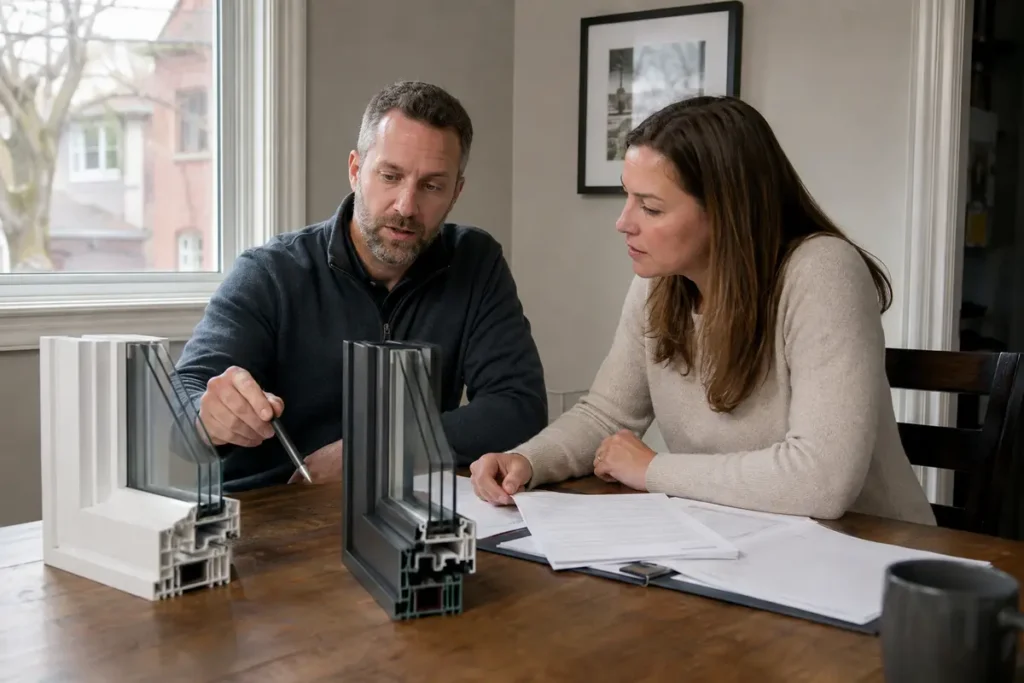
Retrofit installation normally creates less demolition, but both methods require preparation and access.
Before the crew arrives:
During retrofit removal, the crew prepares the retained frame before fitting the new unit. During full-frame removal, more trim and frame material is taken out, and the exposed opening is inspected before installation continues.
At the final walkthrough, open, close and lock every operating sash. Inspect the screens, trim, capping and sealant. Ask how to clean and maintain the windows and how to request service if an issue appears.
Learn more about our professional window and door installation and complete window installation-day process.
Retrofit installation may be the right choice if:
Full-frame replacement may be the right choice if:
If the condition varies, a mixed approach may be possible. Some openings can be completed as retrofits while damaged openings receive full-frame replacement. Confirm that the exterior appearance, glass tint, frame dimensions and trim details will remain coordinated.
If your front door is also approaching replacement, read our guide to deciding whether to replace windows and doors at the same time.
The correct installation method depends on the individual opening, but the same decision process applies throughout the GTA. Imperial Windows and Doors provides retrofit and full-frame window replacement for homeowners in Toronto and surrounding communities, including:
Older neighborhoods, newer subdivisions and custom homes can present very different frames and wall assemblies. The installation method should be chosen after an on-site assessment, not from the postal code or house age alone.
The terms are often used to describe a complete replacement window installed within a suitable existing frame. However, terminology varies between companies. Ask for a written description of the complete new unit and every old component that will remain.
On Toronto brick homes, contractors often use the terms interchangeably. The exact finishing details can still vary. Confirm whether the entire old frame is removed and what insulation, jambs, casing, exterior trim, flashing and capping are included.
No. A deteriorated or unstable frame should not be hidden behind a new window or capping. The damaged material and the source of moisture should be investigated and corrected before the completed opening is sealed.
Usually, because the new window frame sits inside the existing perimeter frame. The amount depends on the old frame, new product and measurements. Ask to see the expected frame dimensions before ordering.
Not automatically. Full-frame removal provides better access to the complete perimeter, but performance still depends on the window, insulation, fastening, air sealing and exterior water management. A properly installed retrofit in a sound frame can also be energy-efficient.
It normally costs more because it requires additional removal, preparation, insulation and finishing. The difference varies by opening size, trim, wall construction, access and required repairs. Compare itemized quotations rather than applying one percentage to every project.
Retrofit is generally faster because less material is removed. Full-frame installation takes longer and can require new jamb extensions, casing and exterior finishing. A reliable schedule can only be provided after the openings and scope have been confirmed.
A complete qualifying replacement window and frame installed within an existing frame may qualify under current program rules when all other requirements are met. Glass-only, sealed-unit-only and sash-only work do not qualify as complete replacement systems. Always confirm the latest program rules before beginning work.
Many older homes benefit from full-frame replacement when the original wood, insulation or previous installation has deteriorated. Retrofit may remain appropriate when the existing frame is dry, solid, square and worth preserving. The decision should be made opening by opening.
Ask whether the complete old perimeter frame will be removed. Then confirm the interior trim, exterior finish, insulation, sealing and repair allowances in writing. Do not rely on the quote total or the phrase “replacement window.”
Retrofit and full-frame window replacement can both provide excellent results when used in the correct opening. The wrong decision occurs when a contractor recommends a method without assessing the frame, explaining what remains or documenting the installation and finishing scope.
At Imperial Windows and Doors, we provide both retrofit and complete brick-to-brick window replacement. We inspect the existing openings, explain the available options and recommend a scope based on condition, performance goals, appearance and budget—not simply the most expensive method.
Explore our replacement windows or contact Imperial Windows and Doors to request a free estimate in Toronto or the GTA. We will measure your windows, review the installation requirements and prepare a clear quotation showing the products and work included.

Imperial Windows and Doors have long been serving our valued clients for over 10 years to be exact. We strive to deliver our clients only the finest solutions guaranteed to suit their needs, style, preferences and budget.

Imperial Windows & Doors provides professionally installed replacement windows, entry doors and patio doors for homeowners across Toronto and the GTA.